
Would you like to receive a personalized
quote by email?

Starting at
1110 €*

Distance
210 km

Duration
13 days / 12 nights

Difficulty
Medium

Regime
Bed and breakfast

Type of Accommodation
Private room with bathroom
Service
Backpack transport
* Price per person, based on double occupancy.
Camino de Santiago with Support
Camino del Norte from Santander to Gijon
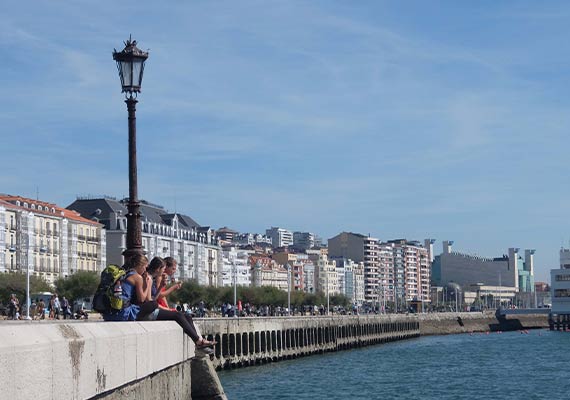
Arrival in Santander
Santander is the capital of Cantabria, a city marked by its maritime and commercial activity. On our first day, we can visit the Sardinero beach, the Cathedral of Nuestra Señora de la Asunción or the Palacio de la Magdalena. Arrival in Santander on behalf of the pilgrims.
Accommodation in Santander.
Santander-Arce
Difficulty level: medium.
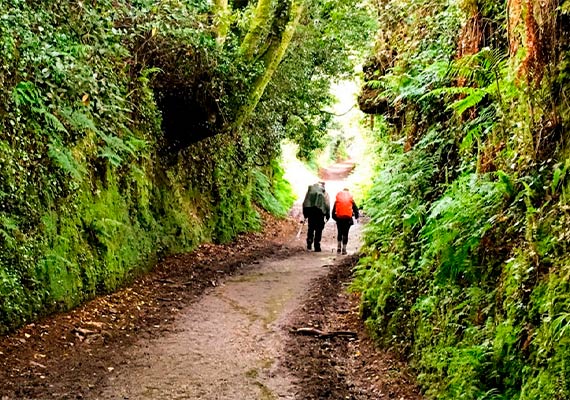
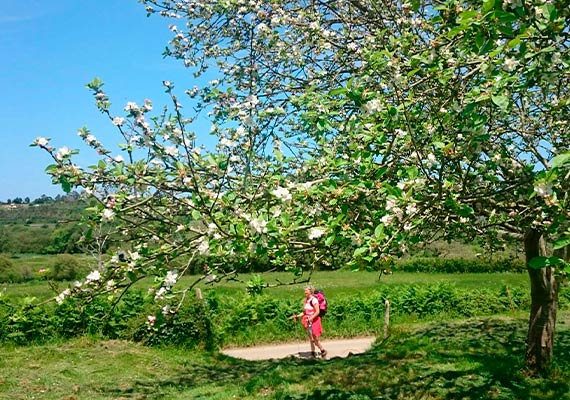
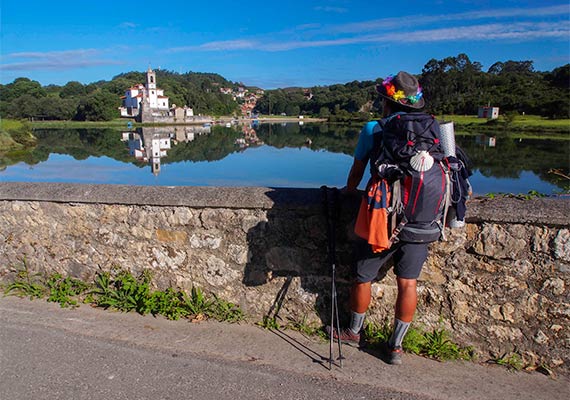
We leave the Cantabrian capital behind and step back into the rural side of the Camino. The day begins with a stretch through the suburbs to Peñacastillo, and then on to Boo de Piélagos, where, depending on the tide, pilgrims either cross the Pas River by bridge or take a short train ride — a common option. A short but pleasant walk through fields and small hamlets takes us to Arce, a peaceful village with river views and that serene, inland Cantabrian atmosphere.
Accommodation in Arce
Arce -Santillana del Mar
Difficulty level: Medium.
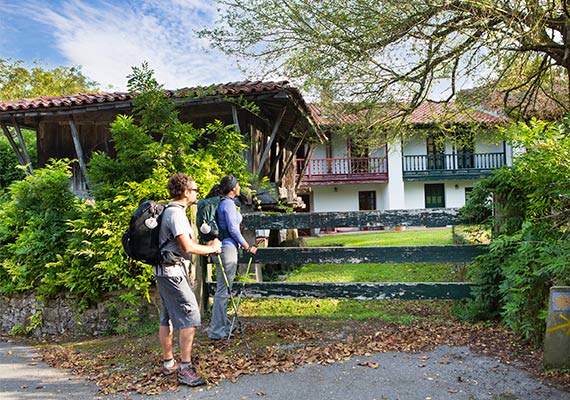
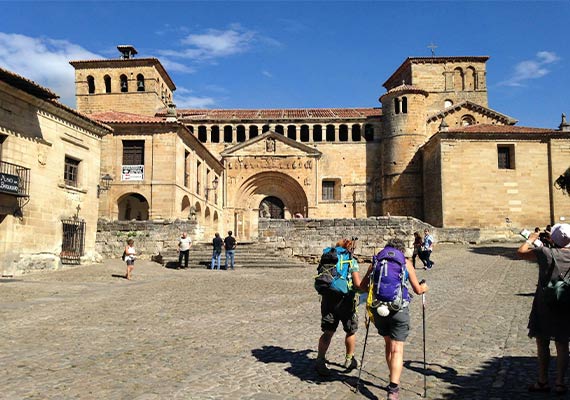
Today’s Camino combines rural charm with medieval beauty. We walk along farm tracks, forest paths, and through small villages like Mogro and Cóbreces. Arriving in Santillana del Mar is one of those unforgettable moments on the Camino. Known as “the town of three lies” — it’s not holy, not flat, and has no sea — it does offer one of the best-preserved medieval town centers in Spain. Cobbled streets, noble manor houses, and the majestic Collegiate Church of Santa Juliana make this stage a journey back in time.
Accommodation in Santillana del Mar.
Santillana de Mar-Comillas
Difficulty level: medium.
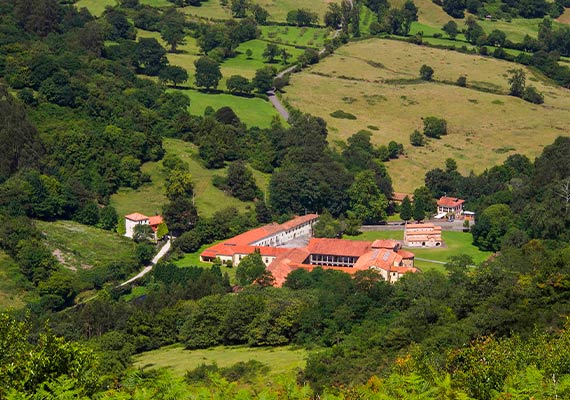
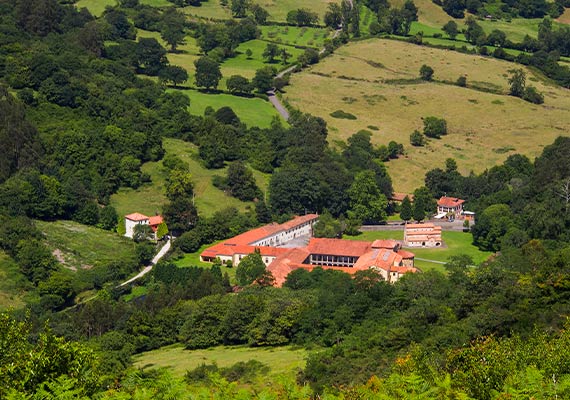
The route that awaits us in its originality today runs away from the sea and is mostly paved. Fortunately, they reformed part of the route and now we get to Luaña Beach, where we enjoy a few kilometers offshore. For those who prefer it, they can choose the original route. In general, it is a stage with moderate climbs without any significant difficulties. We come through cities like Cóbredes, where we can see the Cistercian monastery. The day ends as soon as we reach Comillas. Comillas a charming city, it is worth walking the streets to discover this beautiful city. Sights include Gaudi’s Capricho and the Palace of Sobrellano.
Accommodation in Comillas.
Comillas-San Vicente de la Barquera
Difficulty level: low.
A short stage, more of a salty seaside stroll than a hike. The path follows the coastline on easy trails, with the sea to our left and the Picos de Europa rising on the horizon — a hint of what’s to come in Asturias. San Vicente de la Barquera welcomes us with its medieval bridge, hilltop castle, and the Gothic Church of Santa María de los Ángeles. The Camino here smells like the sea, fresh fish, and long summer evenings. Perfect for a relaxed arrival.
Accommodation in San Vicente de la Barquera.
San Vicente de la Barquera-Colombres
Difficulty level: medium.
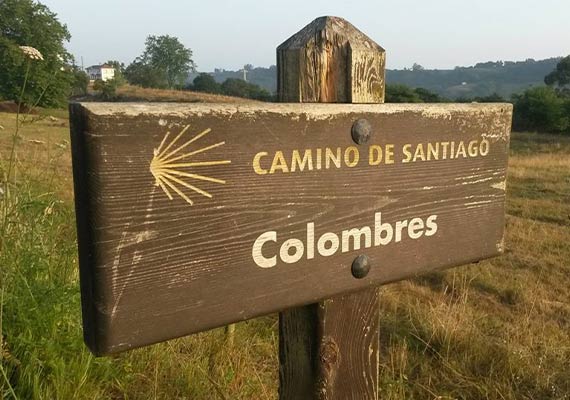
Today we say goodbye to Cantabria and take our first steps into Asturias. The scenery is breathtaking: untouched beaches, winding rivers, and mountain silhouettes in the background. A climb up to the Hermitage of San Antonio rewards us with stunning views. We cross the Tina Mayor estuary and enter Asturias via the town of Unquera, and after a few more kilometers, reach Colombres, a colorful “Indiano” town with colonial-style houses and the Archivo de Indianos, a cultural gem.
Accommodation in Colombres.
Colombres - Llanes
Difficulty level: easy.
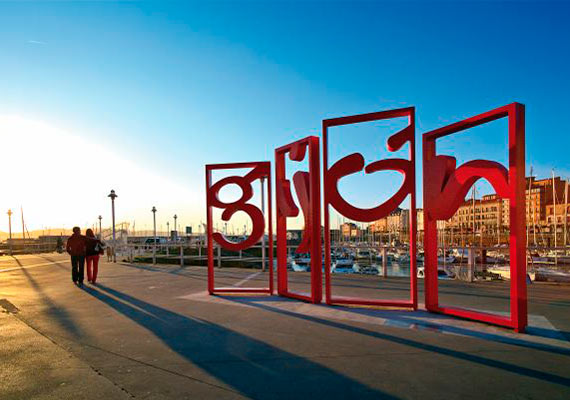
A day with beautiful landscapes awaits us. We walked the first few kilometers until we reach Pendueles, where, as in previous stages, we can choose whether we want to follow the official path or take the coastal path. This path is marked with red and white markings. We recommend following the path as it is much more beautiful at the landscape level. Today we have the most difficult climb when we pass Andrín. A few kilometers away is Llanes, the final destination of today’s stage. Llanes has a monumental complex of particular interest, but the “Cubes of Memory”, an artistic work in the port, should also be highlighted as a mandatory stop.
Accommodation in Llanes.
Llanes-Nueva
Difficulty level: medium.
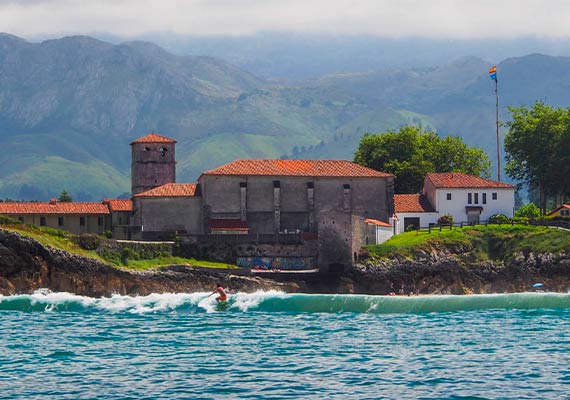
A quiet, coastal stage — ideal for unwinding and soaking in the landscape. We pass beautiful beaches like Celorio and Barro, and small hamlets where time seems to move slower. The mountains loom in the distance, reminding us that this is Asturias: lush, green, peaceful. Nueva is a welcoming village with everything you need for a well-deserved rest before continuing deeper into Asturias.
Accommodation in Nueva
Nueva - Ribadesella
Difficulty level: low.
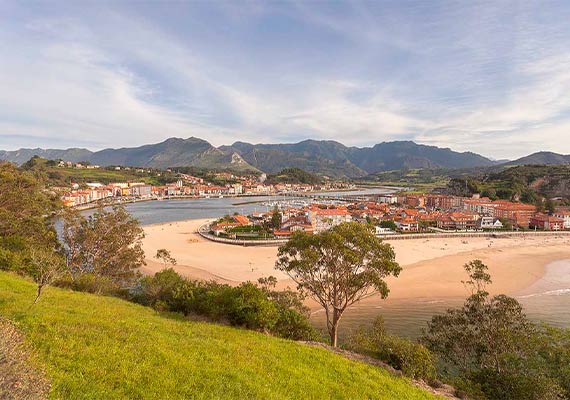
A short stage — almost a gift for your feet. We leave Nueva along coastal paths and forest trails, arriving at Ribadesella, a town famous for the Sella River canoe race, but also for its historical charm. The river flows into the sea here, framed by gentle hills and an animated town center. Don’t miss a walk along Santa Marina beach, lined with beautiful Indiano houses, or the views from the Ermita de la Guía. A perfect place to relax — or enjoy a warm dish of seafood rice.
Accommodation in Ribadesella.
Ribadesella-Colunga
Difficulty level: easy.
We cross the Sella river towards Santa Marina Beach. Today’s tour goes through many beaches. We go uphill towards Vega de Ribadesella. We cross the Vega River and find La Vega Beach. We pass Berbes and follow the path through the beach of Arenal de Morís and Playa de la Espasa. Our destination today is Colunga, a few kilometers away.
Accommodation in Colunga.
Colunga -Villaviciosa
Difficulty level: easy.
One of the shortest stages of the entire journey with a few kilometers is practically a break today. We left the coast completely to take a tour inland and combine the mountainous landscape of the north with asphalt paths. The most important climb of the stage leads us from Pernús to Priesca. Still, it’s not a significant difference. The day ends in Villaviciosa, a city known as Comarca de la Sidra.
Accommodation in Villaviciosa.
Villaviciosa-Gijon
Difficulty level: high.
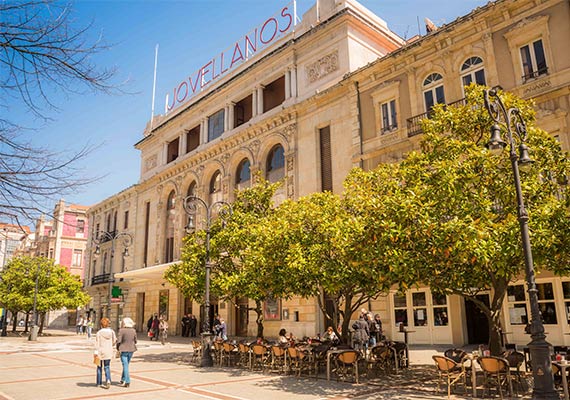
After the short “break” from the previous day, we are now facing one of the most difficult stages of the entire journey. This is because there are two significant actions. The first is a few kilometers before the start of the stage in Niévares, Alto de la Cruz, where we have to climb more than 300 meters. The second, the Collado del Infanzón, immediately after the descent to Peón, where we climb again, this time only 200 meters, a more pleasant and easier ascent. We continue our way to Deba and walk the last kilometers to Gijón. Gijón is the most populous city in Asturias. It is worth getting lost in the old town and enjoying the Plaza Mayor, the Casa Museo de Jovellanos, the Church of San Pedro and the Palacio de Revillagigedo.
Accommodation in Gijon.
Gijon
Buen Camino & see you soon!

Room with private bathroom
Breakfast included
Luggage transport for each stage on the way (max. 20 kg – 1 piece of luggage per person)
24-hour emergency line
Detailed information with stage maps
Pilgrim pass
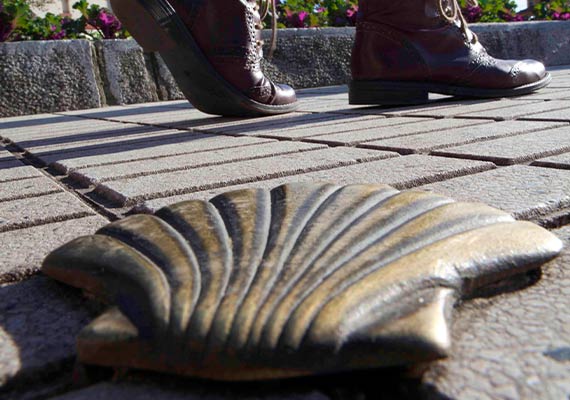
Pilgrim scallop
Travel Insurance

Half board supplement: 25 € / person / night
Private transfer to Santander: on request
Private transfer to the airport: on request
Extra piece of luggage: €8 per stage and piece of luggage (maximum 20 kg)
Extra nights: on request
Travel cancellation insurance
Camino de Santiago with Support
Camino del Norte from Santander to Gijon

Starting at 1110 €*
Price per person in a double room
Price per person, based on double occupancy.