
Vía de la Plata
Vía de la Plata routes
The Vía de la Plata from Ourense is a unique experience on the Camino de Santiago. Pilgrims who choose this route embark on a journey that takes them through the beautiful landscapes of Galicia. From the green, forested mountains to the meandering rivers, the route offers a spectacular view of the region. The Camino de Santiago is an opportunity to explore the rich Galician culture and hospitality while progressing toward the final destination of Compostela.
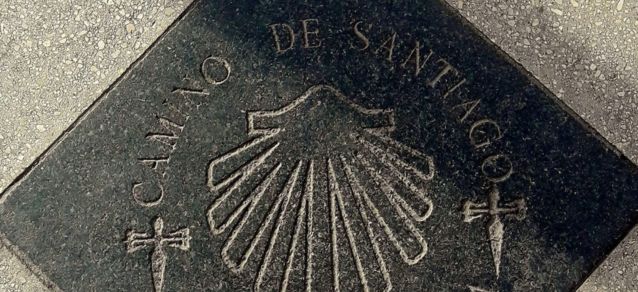
Vía de la Plata routes
The Vía de la Plata from Ourense is a unique experience on the Camino de Santiago. Pilgrims who choose this route embark on a journey that takes them through the beautiful landscapes of Galicia. From the green, forested mountains to the meandering rivers, the route offers a spectacular view of the region. The Camino de Santiago is an opportunity to explore the rich Galician culture and hospitality while progressing toward the final destination of Compostela.
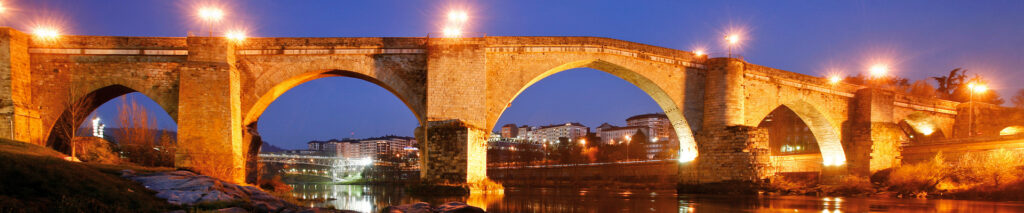
The Vía de la Plata also known as the Camino de Santiago de la Plata, is a historic route that stretches across Spain, connecting Seville in the south with Santiago de Compostela in the northwest. Its name, Vía de la Plata, comes from the ancient word meaning “road” or “way.”
This route has its roots in Roman times, used to connect the south of the peninsula with the north. Along the way, pilgrims can enjoy a diverse range of landscapes, from the rolling plains of Extremadura to the green mountains of Galicia. The route also passes through historic cities such as Mérida, Salamanca, and Zamora, where pilgrims can explore Spain’s cultural and architectural riches.
The pilgrims’ experience on the Vía de la Plata is unique and enriching. They walk along ancient cobblestone paths, cross Roman bridges, and discover the hospitality of local communities. This route offers a blend of history, spirituality, and natural beauty that leaves an indelible mark on those who walk it.
In this case, we present a shorter and more time-efficient option for the Vía de la Plata, starting in Ourense. One of the most fascinating routes on the Camino de Santiago, it combines its rich historical origins with varied landscapes and offers an enriching experience for pilgrims seeking spiritual and cultural connection on their journey to Santiago de Compostela.
Your adventure on the Vía de la Plata starts here! Buen Camino!
We answer some of the most frequently asked
questions about the Vía de la Plata
How many kilometers is the Vía de la Plata?
The original Vía de la Plata route of the Camino de Santiago starts from Seville and is nearly one thousand kilometers. This route is also known as the Camino Mozárabe to Santiago.
As with most Camino de Santiago routes today, most pilgrims opt for much shorter sections, the most popular one being the section that starts in Ourense, which is 107 kilometers.
How many kilometers is the Vía de la Plata?
The Vía de la Plata, from Ourense to Santiago, consists of five stages.
Where does the Vía de la Plata start and end?
Traditionally, the Vía de la Plata begins in Seville, taking an ancient Roman road that crossed the Iberian Peninsula from south to north. This road was used by pilgrims traveling from the south to visit the tomb of Apostle James, ending in the town of Santiago de Compostela.
The most traveled and popular variant starts in the city of Ourense and also ends, of course, in Santiago de Compostela.
Which towns should I visit on the Vía de la Plata?
Ourense and Silleda are the main towns along the Vía de la Plata in Galicia, not to mention the destination of the Camino, Santiago de Compostela.
What was the route of the Vía de la Plata?
The Vía de la Plata uses an ancient Roman road that connected Mérida with Astorga. Its name could come from the Arabic “Al-Balat,” referring to a paved route. The pilgrims of the Camino de Santiago traveling from the south of the Peninsula used it to walk to Santiago.
Can I do the Vía de la Plata without carrying luggage?
Yes, you can walk the Vía de la Plata without carrying luggage. In fact, most pilgrims today hire a luggage transfer service between stages, allowing them to walk with only a small backpack containing the essentials for the day.
On all the routes of the Camino de Santiago organized by Rutas Meigas, we include the transfer of one piece of luggage per pilgrim up to a maximum of 20 kg. If you need us to carry more than one piece of luggage, you can easily arrange this additional service at a very affordable cost.
Still have questions about the Vía de la Plata?