
Would you like to receive a personalized
quote by email?
The Cantabrian Sea, mountains and legends. An unique experience, less crowded and filled with breathtaking landscapes.
Camino del Norte from San Sebastián to Santiago: Cantabrian Sea, mountains and legends
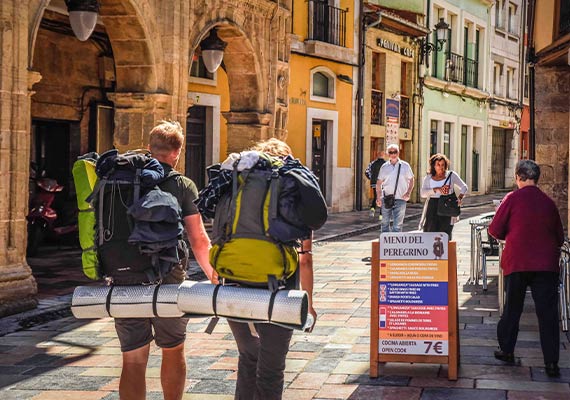
Camino del Norte from San Sebastián to Santiago is your route if you’re looking for a unique Camino de Santiago experience, less crowded and filled with breathtaking landscapes. Also known as the Northern Way or Coastal Camino, this spectacular path runs along Spain’s northern coast, from San Sebastián to Santiago de Compostela. Nearly 900 kilometers that combine the power of the sea, the lush greens of the north, and the warmth of its people. Ready to walk?
A Camino de Santiago route with waves, forests, and characterful villages
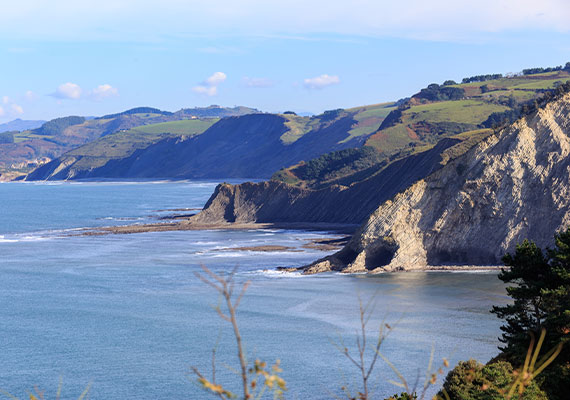
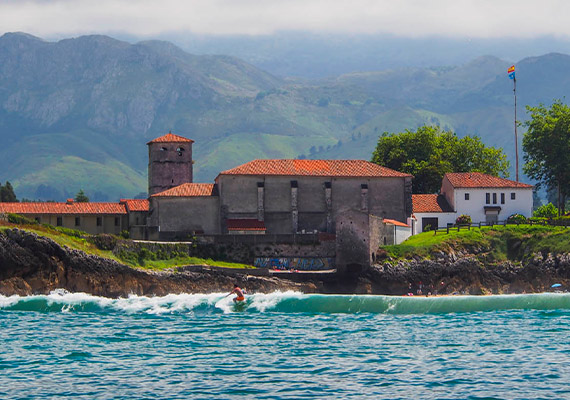
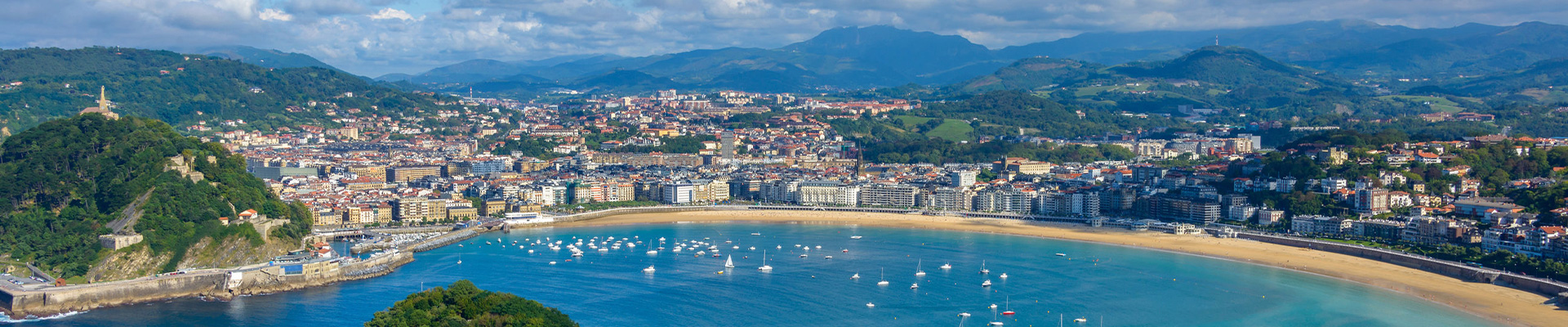
The Camino del Norte from San Sebastián to Santiago starts with a feast for the senses: La Concha Bay in San Sebastián. From there, the route hugs dramatic cliffs, passes through charming fishing towns, and slowly enters the green heart of the Basque Country. Zarautz, Getaria, Deba, Markina… each day is a mix of sea and mountains, of challenging climbs and unforgettable views.
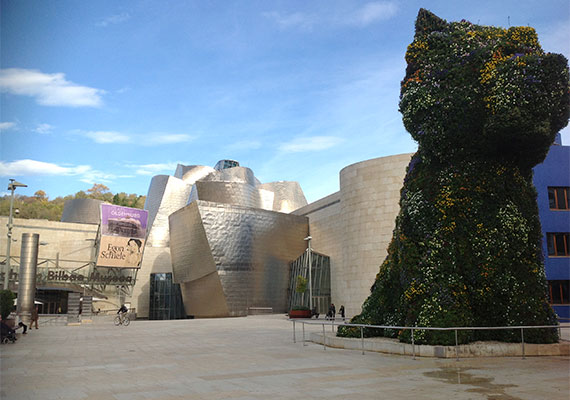
When you reach Bilbao, the Camino becomes more urban and cosmopolitan. Here you can visit the famous Guggenheim Museum or refuel with a pintxo tour before continuing your journey. The path then follows the Cantabrian coast into Cantabria and Asturias, taking you past wild beaches, medieval bridges, river crossings, and towns like Castro Urdiales, Comillas, or Llanes, places that look like they’ve leapt out of a novel.
The inland side of Galicia on the Northern Way: silence, mist, and mystery
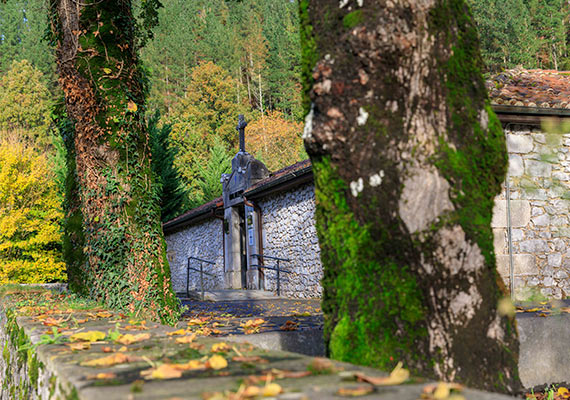
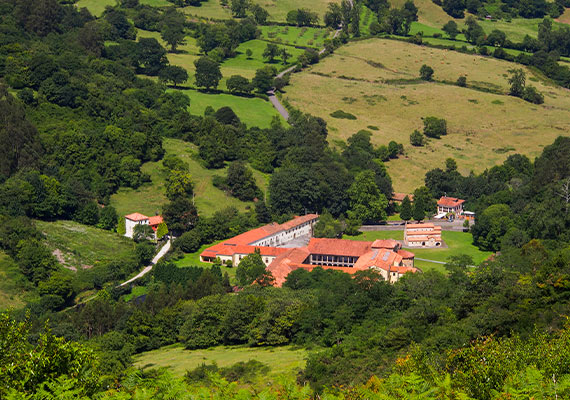
From Ribadeo, already in Galicia, the Camino del Norte becomes more intimate, rural, and spiritual. The ocean slowly fades away and gives way to earthy paths, stone-walled trails, ancient granaries, monasteries, and tiny villages where time seems to stand still. Places like Mondoñedo, Sobrado dos Monxes, and Arzúa are unforgettable stops on the road to Santiago.
And at the end, as in every great story, comes the grand finale: reaching the Praza do Obradoiro, right in front of the Cathedral of Santiago. That moment when your heart races, your feet ache, but your soul feels like it’s floating. And you realize that the most important part wasn’t just arriving — it was walking every step of this Camino del Norte.
Why choose the Camino del Norte from San Sebastián to Santiago?
- Because it’s less crowded and brings you closer to wilder, untouched nature.
- Because it offers both ocean and mountains.
- Because it blends culture, history, and gastronomy at every turn.
- Because it evolves with you: there are hard days and magical days — just like life itself.
The Camino del Norte from San Sebastián to Santiago is forty-one days, but it can also be done in shorter sections, between eight and eleven days:

Starting at
3400 €*

Distance
795 km

Duration
41 days / 40 nights

Difficulty
Medium – High

Regime
Bed and breakfast

Type of Accommodation
Private room with bathroom

Service
Backpack transport

Transfer
As marked on the itinerary
* Price per person, based on double occupancy.
Camino de Santiago with Support
Camino del Norte from San Sebastian to Santiago de Compostela
Camino del Norte from San Sebastián to Santiago: Cantabrian Sea, mountains and legends
Camino del Norte from San Sebastián to Santiago is your route if you’re looking for a unique Camino de Santiago experience, less crowded and filled with breathtaking landscapes. Also known as the Northern Way or Coastal Camino, this spectacular path runs along Spain’s northern coast, from San Sebastián to Santiago de Compostela. Nearly 900 kilometers that combine the power of the sea, the lush greens of the north, and the warmth of its people. Ready to walk?
A Camino de Santiago route with waves, forests, and characterful villages
The Camino del Norte from San Sebastián to Santiago starts with a feast for the senses: La Concha Bay in San Sebastián. From there, the route hugs dramatic cliffs, passes through charming fishing towns, and slowly enters the green heart of the Basque Country. Zarautz, Getaria, Deba, Markina… each day is a mix of sea and mountains, of challenging climbs and unforgettable views.
When you reach Bilbao, the Camino becomes more urban and cosmopolitan. Here you can visit the famous Guggenheim Museum or refuel with a pintxo tour before continuing your journey. The path then follows the Cantabrian coast into Cantabria and Asturias, taking you past wild beaches, medieval bridges, river crossings, and towns like Castro Urdiales, Comillas, or Llanes, places that look like they’ve leapt out of a novel.
The inland side of Galicia on the Northern Way: silence, mist, and mystery
From Ribadeo, already in Galicia, the Camino del Norte becomes more intimate, rural, and spiritual. The ocean slowly fades away and gives way to earthy paths, stone-walled trails, ancient granaries, monasteries, and tiny villages where time seems to stand still. Places like Mondoñedo, Sobrado dos Monxes, and Arzúa are unforgettable stops on the road to Santiago.
And at the end, as in every great story, comes the grand finale: reaching the Praza do Obradoiro, right in front of the Cathedral of Santiago. That moment when your heart races, your feet ache, but your soul feels like it’s floating. And you realize that the most important part wasn’t just arriving — it was walking every step of this Camino del Norte.
Why choose the Camino del Norte from San Sebastián to Santiago?
- Because it’s less crowded and brings you closer to wilder, untouched nature.
- Because it offers both ocean and mountains.
- Because it blends culture, history, and gastronomy at every turn.
- Because it evolves with you: there are hard days and magical days — just like life itself.
The Camino del Norte from San Sebastián to Santiago is forty-one days, but it can also be done in shorter sections, between eight and eleven days:
Arrival in San Sebastian
Just as Paris is worth a fair, every motive is good to get to know San Sebastián. La Concha Bay presides over the city, a city that combines tradition and modernity. We are also in the Basque Country with its more than remarkable gastronomy, so it is not a bad idea to do a good pintxos route to gather strength before you embark on the Way of St. James. His monuments include the San Telmo Museum, the Victoria Eugenia Theater and the María Cristina Hotel, both in neoplateresque style, the Buen Pastor Cathedral and of course Rafael Moneo’s modern Kuursal building.Arrival in San Sebastián on your own.
Accommodation in San Sebastian
San Sebastian - Zarautz
Difficulty level: medium to high.
We start our Camino del Norte from San Sebastián. We leave the ascending Monte Igueldo, which closes the Bahía de la Concha. It’s an important slope, so you have to face it in a good mood, a spirit that, without a doubt, doesn’t offer the wonderful view of the city that we left behind. This is a phase in which good prospects will prevail, both from Igueldo and from the descent to Zarautz, the end of today. We drive through the fishing village of Orio with an interesting old town, in which the church of San Nicolás de Bari stands out.
Accommodation in Zarautz
Zarautz-Deba
Difficulty level: medium to high.
Stage similar to that of the previous day, in which ascents and descents predominate again, but also the wonderful view of the coast, which is dominated by the Cantabrian Sea. We will have to consider three climbs, one at the beginning and one towards the end, although we will end the stage with the descent from Itziar to Deba, a descent in which precautions have to be taken with slips during the rainy season.
Accommodation in Deba.
Deba-Markina
Difficulty level: high.
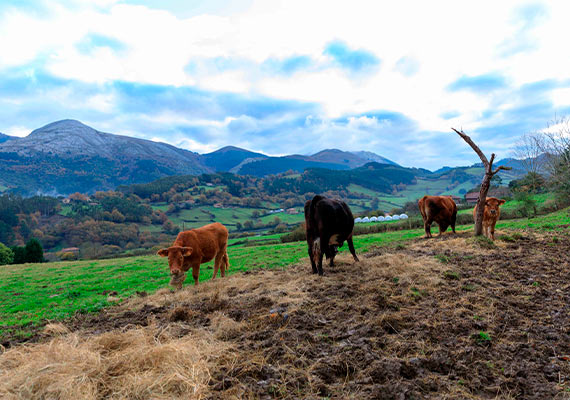
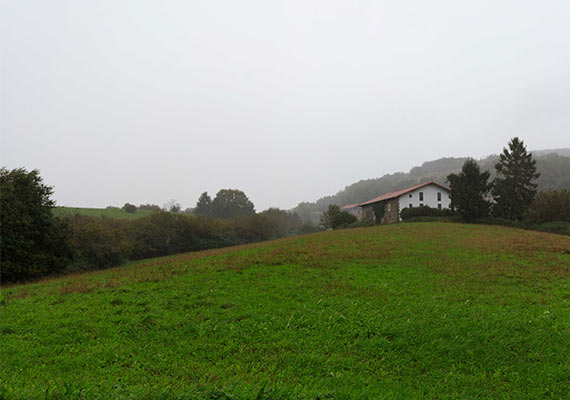
The route gets harder when we leave the coastal landscape and enter mountainous areas inland. We will visit beautiful valley areas that are typical of the Basque Country. It is an area without important cities, we will find only a few farmhouses here and there, so it is advisable to get used to it well.
Accommodation in Markina.
Markina-Gernika
Difficulty level: high.
Again we face significant ups and downs. The most difficult part of the stage is the ascent from Bolibar to Ziortza. In this city we can take a short break to relax and visit the Zenarruza monastery and its cloister. Upon arrival at our destination, it is recommended to visit the meeting house and the Guernika tree.
Accommodation in Gernika.
Gernika-Lezama
Difficulty level: medium to high.
We start the day with the most important climb of the day with a gradient of about 300 meters. We are in the heart of the Urdaibai Biosphere Reserve, so it is worth quietly enjoying the natural landscapes that accompany us, even though we are still in a difficult geographical area. In today’s phase we come through the city of Larrabe, where Eneko Atxa operates its two restaurants with a Michelin star, Azurmendi (***) and Eneko (*).
Accommodation in Lezama.
Lezama-Bilbao
Difficulty level: medium.
After several stages with around twenty kilometers, we face a much shorter one. We will also have only one climb, Mount Avril, with a 300m gradient, but quite progressive so it is not overly difficult. The descent leads us to the historical center of Bilbao, past the Basilica of Our Lady of Begoña. In Bilbao, besides Santiago de Compostela, we find the only cathedral on the Spanish mainland that is dedicated to Santiago Apóstol. Visits to the old town’s taverns are also essential for a traditional pintxo tour and of course for the Guggenheim Museum.
Accommodation in Bilbao.
Bilbao-Portugalete
Difficulty: easy.
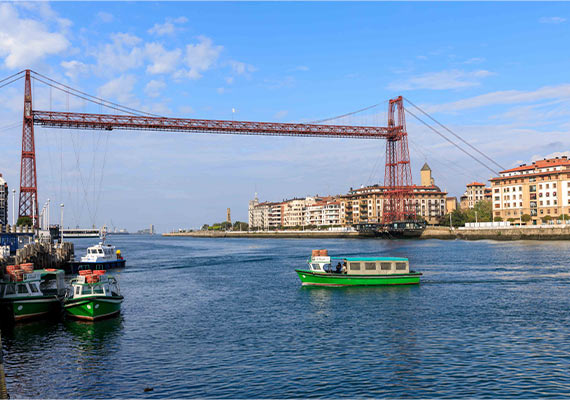
The beginning of today’s stage covers a large part of the city of Bilbao. It is an urban part of the Way of St. James, which is quite surprising for some pilgrims. You can make two sections, the official one, longer, or you can follow the Nervión along its course, which saves us several kilometers. Each of the sections is fairly simple and flat. We reach Portugalete via the impressive Vizcaya Bridge across the river.
Accommodation in Portugalete.
Portugalete-Castro Urdiales
Difficulty level: medium.
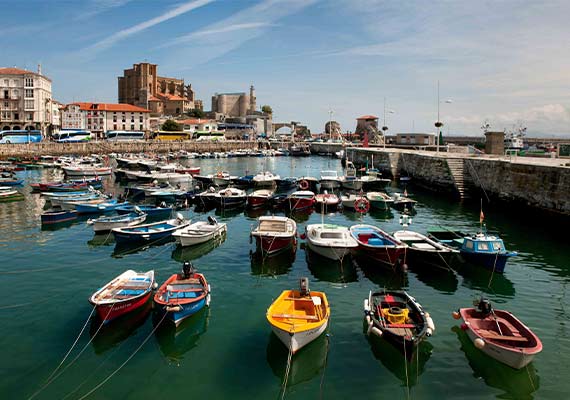
In today’s phase we will enter Cantabria and restore the sections of the Camino next to the Cantabrian coast for the following days. If we leave the city of Ontón, we will find two variants, the official one or the one that follows the national road, which used to be very busy and is now quieter thanks to the motorway. The national variant is shorter than the official variant. However, we definitely recommend taking the appropriate precautions for the sections along the roads when selecting this second option. We will end up in the beautiful fishing village of Castro Urdiales.
Accommodation in Castro Urdiales.
Castro Urdiales -Laredo
Difficulty level: medium.
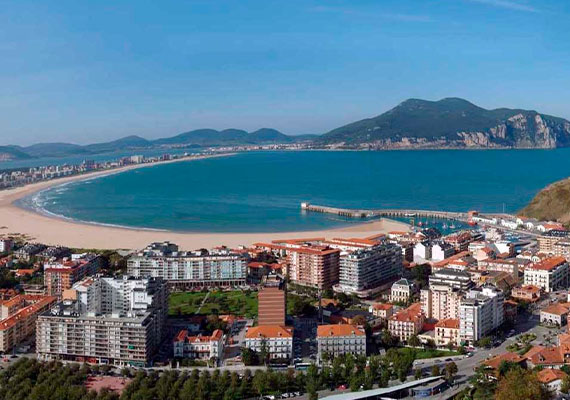
Again we find the opportunity to shorten the stage along the national road, although on today’s trip it is worth following the official path for the beauty of the passages that crosses it between the Cantabrian coast and the inland valleys with green forests. On the official road we find a second variant that saves us about three kilometers, the crossing of La Magdalena. All options are perfectly marked and it is the pilgrim’s choice which one he prefers. The end of our stage, Laredo, is a tourist town with wonderful beaches.
Accommodation in Laredo.
Laredo-Noja
Difficulty level: low-medium.
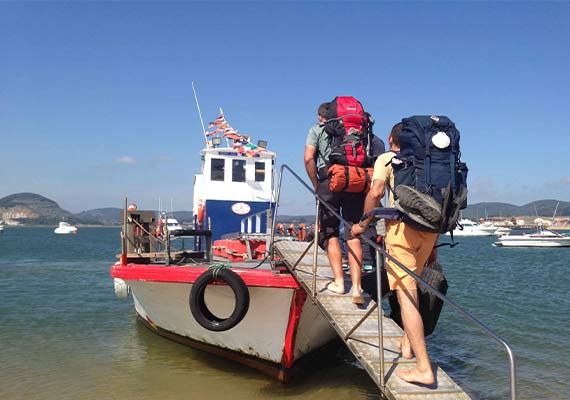
Today the Camino turns into a little maritime adventure: we’ll take a boat across the Treto estuary to Santoña, famous for its anchovies and long-standing canning tradition. From there, we walk through marshlands, natural trails and quiet forests until we reach Noja, a coastal town with a laid-back, summery vibe, long beaches, and elegant “Indiano” architecture. It’s a short stage — perfect for recharging after previous efforts.
Accommodation in Noja.
Noja -Santander
Difficulty level: medium.
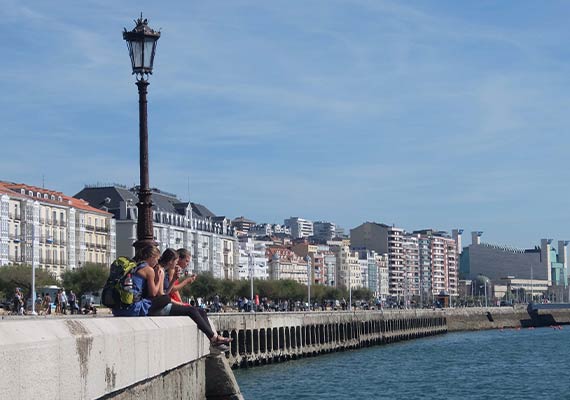
A varied stage that blends rural, urban, and coastal landscapes. From Noja, the path leads to Galizano and Loredo, through fields, cliffs, and small countryside churches. The highlight comes at the end of the day: a scenic boat ride across the bay from Somo to Santander, with the silhouette of the city, the Magdalena Palace, and the Sardinero beaches welcoming you. Santander is elegant, peaceful, and full of charm — perfect for an evening stroll, a seafood dinner, or simply watching the waves.
Accommodation in Santander.
Santander-Arce
Difficulty level: low – medium.
We leave the Cantabrian capital behind and step back into the rural side of the Camino. The day begins with a stretch through the suburbs to Peñacastillo, and then on to Boo de Piélagos, where, depending on the tide, pilgrims either cross the Pas River by bridge. A short but pleasant walk through fields and small hamlets takes us to Arce, a peaceful village with river views and that serene, inland Cantabrian atmosphere.
Accommodation in Arce.
Arce - Santillana del Mar
Difficulty level: medium.
Today’s Camino combines rural charm with medieval beauty. We walk along farm tracks, forest paths, and through small villages like Mogro and Cóbreces. Arriving in Santillana del Mar is one of those unforgettable moments on the Camino. Known as “the town of three lies” — it’s not holy, not flat, and has no sea — it does offer one of the best-preserved medieval town centers in Spain. Cobbled streets, noble manor houses, and the majestic Collegiate Church of Santa Juliana make this stage a journey back in time.
Accommodation in Santillana del Mar.
Santillana de Mar-Comillas
Difficulty level: medium.
The route that awaits us in its originality today runs away from the sea and is mostly paved. Fortunately, they reformed part of the route and now we get to Luaña Beach, where we enjoy a few kilometers offshore. For those who prefer it, they can choose the original route. In general, it is a stage with moderate climbs without any significant difficulties. We come through cities like Cóbredes, where we can see the Cistercian monastery. The day ends as soon as we reach Comillas. Comillas a charming city, it is worth walking the streets to discover this beautiful city. Sights include Gaudi’s Capricho and the Palace of Sobrellano.
Accommodation in Comillas.
Comillas- San Vicente de la Barquera
Difficulty level: low.
A short stage, more of a salty seaside stroll than a hike. The path follows the coastline on easy trails, with the sea to our left and the Picos de Europa rising on the horizon — a hint of what’s to come in Asturias. San Vicente de la Barquera welcomes us with its medieval bridge, hilltop castle, and the Gothic Church of Santa María de los Ángeles. The Camino here smells like the sea, fresh fish, and long summer evenings. Perfect for a relaxed arrival.
Accommodation in San Vicente de la Barquera.
San Vicente de la Barquera - Colombres
Difficulty level: medium.
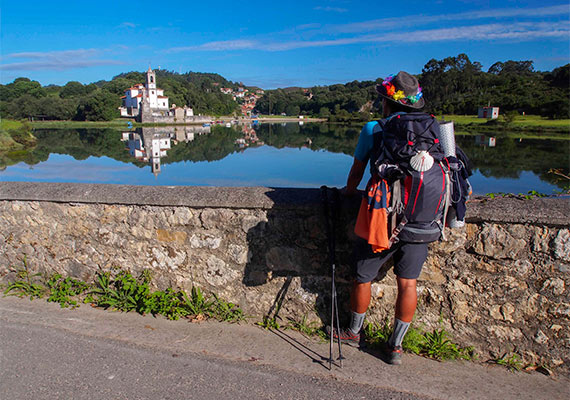
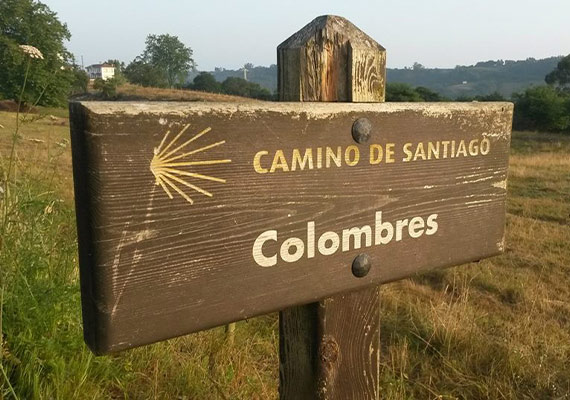
Today we say goodbye to Cantabria and take our first steps into Asturias. The scenery is breathtaking: untouched beaches, winding rivers, and mountain silhouettes in the background. A climb up to the Hermitage of San Antonio rewards us with stunning views. We cross the Tina Mayor estuary and enter Asturias via the town of Unquera, and after a few more kilometers, reach Colombres, a colorful “Indiano” town with colonial-style houses and the Archivo de Indianos, a cultural gem.
Accommodation in Colombres.
Colombres - Llanes
Difficulty level: easy.
A day with beautiful landscapes awaits us. We walked the first few kilometers until we reach Pendueles, where, as in previous stages, we can choose whether we want to follow the official path or take the coastal path. This path is marked with red and white markings. We recommend following the path as it is much more beautiful at the landscape level. Today we have the most difficult climb when we pass Andrín. A few kilometers away is Llanes, the final destination of today’s stage. Llanes has a monumental complex of particular interest, but the “Cubes of Memory”, an artistic work in the port, should also be highlighted as a mandatory stop.
Accommodation in Llanes.
Llanes- Nueva
Difficulty level: low- medium.
A quiet, coastal stage — ideal for unwinding and soaking in the landscape. We pass beautiful beaches like Celorio and Barro, and small hamlets where time seems to move slower. The mountains loom in the distance, reminding us that this is Asturias: lush, green, peaceful. Nueva is a welcoming village with everything you need for a well-deserved rest before continuing deeper into Asturias.
Accommodation in Nueva.
Nueva - Ribadesella
Difficulty level: easy.
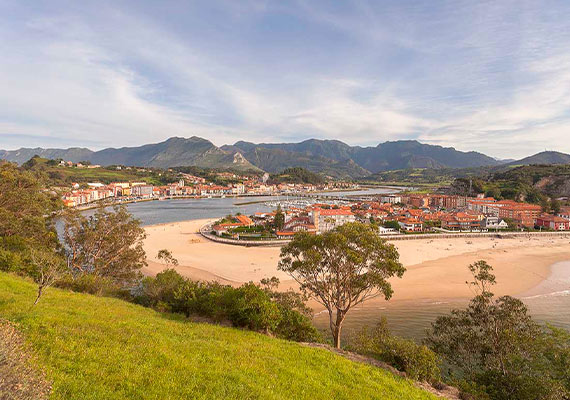
A short stage — almost a gift for your feet. We leave Nueva along coastal paths and forest trails, arriving at Ribadesella, a town famous for the Sella River canoe race, but also for its historical charm. The river flows into the sea here, framed by gentle hills and an animated town center. Don’t miss a walk along Santa Marina beach, lined with beautiful Indiano houses, or the views from the Ermita de la Guía. A perfect place to relax — or enjoy a warm dish of seafood rice.
Accommodation in Ribadesella.
Ribadesella-Colunga
Difficulty level: easy.
We cross the Sella river towards Santa Marina Beach. Today’s tour goes through many beaches. We go uphill towards Vega de Ribadesella. We cross the Vega River and find La Vega Beach. We pass Berbes and follow the path through the beach of Arenal de Morís and Playa de la Espasa. Our destination today is Colunga, a few kilometers away.
Accommodation in Colunga.
Colunga -Villaviciosa
Difficulty level: easy.
One of the shortest stages of the entire journey with a few kilometers is practically a break today. We left the coast completely to take a tour inland and combine the mountainous landscape of the north with asphalt paths. The most important climb of the stage leads us from Pernús to Priesca. Still, it’s not a significant difference. The day ends in Villaviciosa, a city known as Comarca de la Sidra.
Accommodation in Villaviciosa.
Villaviciosa-Gijon
Difficulty level: high.
After the short “break” from the previous day, we are now facing one of the most difficult stages of the entire journey. This is because there are two significant actions. The first is a few kilometers before the start of the stage in Niévares, Alto de la Cruz, where we have to climb more than 300 meters. The second, the Collado del Infanzón, immediately after the descent to Peón, where we climb again, this time only 200 meters, a more pleasant and easier ascent. We continue our way to Deba and walk the last kilometers to Gijón. Gijón is the most populous city in Asturias. It is worth getting lost in the old town and enjoying the Plaza Mayor, the Casa Museo de Jovellanos, the Church of San Pedro and the Palacio de Revillagigedo.
Accommodation in Gijon.
Gijon-Aviles
Difficulty level: medium.
We leave Gijón to enter a green and rural landscape. The profile of the stage is quite simple, without much worry. We drive through small towns like Pavierna and Santa Eulalia, where the Church of Santa Eulalia is located. The rest of the route follows the course of the Ría de Avilés. Avilés ended today’s stage. It is an industrial city, but also has an interesting old town. As sights we can mention the Plaza de España with the town hall and the Palace of the Marquis of Ferrera (currently a hotel), the Church of San Nicolás de Bari and the Palace of García Pumarino.
Accommodation in Aviles.
Aviles- Soto del Barco
Difficulty: easy.
Today we return to a more rural and coastal landscape. Leaving the city behind, we follow trails through eucalyptus woods, green fields, and small Asturian villages like Salinas and San Juan de la Arena, where you can enjoy delicious fresh fish. Soto del Barco, sitting by the Nalón estuary, feels like a calm, necessary pause in the journey. A good day for walking, reflecting — or simply being.
Accommodation in Soto del Barco
Soto del Barco - Soto de Luiña
Difficulty level: medium.
The Camino regains its natural beauty. We cross valleys, tree-lined paths, and villages that feel like time capsules. The climb to Alto del Palicio challenges the legs, but the views more than compensate. Arriving in Soto de Luiña is especially meaningful. Here, you can feel the deep roots of the Camino’s history.
Accommodation in Soto de Luiña.
Soto de Luiña-Ballota
Difficulty level: easy.
A short but stunning stage — perfect for recharging or taking your time. You can follow the coastal variant, which offers spectacular cliffs, beaches, and panoramic viewpoints. Ballota is a tiny village in western Asturias, surrounded by meadows and authenticity. A peaceful stop to reconnect with the simplicity of the Camino.
Accommodation in Ballota.
Ballota-Luarca
Difficulty level: easy.
As at the end of the previous day, the first kilometers of this new day take us close to the coast, with a view of the beaches and towering cliffs as far as Cadavevo. From here we return to go through further inner landscapes. It is a fairly quiet and easy stage, we come through small towns such as San Cristóbal or Querúa. The only notable difficulty on the stage is the short but steep climb at the exit of the Hotel Canero, which once passed the small town of Chano de Canero. Once that climb is over, the rest is a breeze. We are a few kilometers from the end of the stage, Luarca. It is a small but nice fishing village.
Accommodation in Luarca.
Luarca-Navia
Difficulty level: easy.
The first kilometers from Luarca are ascending but moderate. We cross the Barayo River and descend to Villapedre. The stage is far from the coast, we cross numerous cities and spend a large part of the route near a national road. Nevertheless, the rivers will continue to be our travel companions. Our destination today in Navia.
Accommodation in Navia.
Navia-Ribadeo
Difficulty level: easy.
Today’s stage begins with a choice: Tol or Tapias de Casariego? The Tapias de Casariego option takes us along the coast, while Tol leads us inland. Both itineraries have no unevenness problems, but it is advisable to choose Tapias de Casariego as this option offers more cities and therefore more services. In addition, Tapias de Casariego is a fishing village with a beautiful harbor. In each of the two routes we have to cross the Ría del Eo to get to Ribadeo and therefore to spend our first night in Galicia. We are getting closer.
Accommodation in Ribadeo.
Ribadeo-Villamartin Grande
Difficulty level: medium.
First day in Galicia. We move completely away from the coastal landscapes to start again with the mountainous arrangement. It is a short but intense stage. The first few kilometers of the day lead through flat terrain or with moderate slopes, but as soon as we reach A Ponte de Arante, we start a steep climb from 100 meters to almost 360 meters. As soon as we have overcome the ascent, we are only a few kilometers from today’s destination, Villamartin Grande.
Accommodation in Villamartin Grande.
Villamartin Grande -Mondoñedo
Schwierigkeitsgrad: niedrig.
Der Tag beginnt mit einem flachen Abstieg nach Gondán. Nach dem Tag zuvor wird es eine angenehme Etappe sein. Wir steigen ein Stück zur Kirche San Xusto hinauf und fahren auf dem Fluss Batán weiter nach Vilanova de Lourenzá. Wir haben wieder einen Aufstieg, der uns nach Arroxo führt. Der Rest der Strecke weist sehr moderate Steigungen auf. Wir kommen endlich in Mondoñedo an. Die Kathedrale und die Altstadt von Mondoñedo wurden zu einer historisch-künstlerischen Stätte erklärt.
Unterkunft in Mondoñedo.
Mondoñedo-Abadín
Schwierigkeitsgrad: Niedrig.
Die heutige Etappe führt uns durch das innere Plateau von Lugo, bekannt als Terra Cha. An diesem Tag sind wir nur mäßig von 100 auf über 500 Meter gestiegen, so dass keine großen Anstrengungen erforderlich sind. Auf unserem Weg passieren wir kleine Dörfer wie O Vilar oder Lousada, bis wir Abadín erreichen.
Unterkunft in Abadín.
Abadín-Villalba
Schwierigkeitsgrad: niedrig.
Angenehme Etappe durch flaches Land, grüne Wiesen und Wälder, die parallel zu einer Nationalstraße verlaufen. Der Fluss Anllo und der Fluss Arnela kreuzen unseren Weg sowie kleine Städte wie As Paredes, Martiñan oder O Campo do Cristo. Wir übernachten in Villalba, der Hauptstadt von Terra Chá. Sehr sehenswert ist die Torreón de los Condes de Andrade (derzeit ist es ein Parador).
Unterkunft in Vilalba.
Villalba-Bahamonde
Schwierigkeitsgrad: Niedrig.
Eine ruhige Übergangsetappe. Wir wandern auf Landwegen durch Kastanien- und Eukalyptuswälder und vorbei an Weilern. Das Tempo bestimmt die Landschaft – ideal für einen Tag voller Gedanken. Baamonde hat eine große Handwerkstradition und ist bekannt als Heimat des galicischen Bildhauers Víctor Corral, dessen Haus heute ein Museum ist.
Unterkunft in Bahamonde.
Bahamonde - Miraz
Schwierigkeitsgrad: Niedrig.
Eine kurze Etappe, die man langsam genießen sollte. Der Weg führt durch winzige Dörfer, vorbei an traditionellen Hórreos, alten Waschplätzen und durch reine Natur. Miraz ist für viele Pilger ein symbolischer Ort: abgelegen, bescheiden, friedlich. Ein Platz, um zur Ruhe zu kommen und sich mit sich selbst und anderen Pilgern zu verbinden.
Unterkunft in Miraz.
Bahamonde -Sobrado dos Monxes
Schwierigkeitsgrad: mittel.
Eine lange, aber spirituell intensive Etappe. Sobrado dos Monxes beherbergt das wichtigste Zisterzienserkloster am Camino del Norte. Der Tag verläuft über ländliche Wege, sanfte Hügel und winzige Dörfer. Und am Ende erhebt sich das Kloster wie ein Leuchtturm des Friedens aus dem Wald. Viele Pilger übernachten direkt im Kloster – für die volle Erfahrung.
Unterkunft in Sobrado dos Monxes.
Sobrado dos Monxes -Arzua
Schwierigkeitsgrad: niedrig.
Letzte Etappe auf der Nordroute. Wir verabschieden uns mit einer einfachen Tour ohne größere Komplikationen. Wir verlassen die unbefestigten Straßen, die uns in den letzten Tagen begleitet haben, um wieder auf asphaltierte Straßen zu gelangen. Die ländliche Landschaft, die uns geleitet hat, verändert sich auch, um mehr städtischen Gebieten Platz zu machen. Unsere Etappe endet in Arzúa, wo wir die Gelegenheit nicht verpassen sollten, die berühmten Käsesorten zu probieren.
Unterkunft in Arzua.
Azúa - O Pedrouzo
Schwierigkeitsgrad: niedrig.
Heute starten wir auf dem französischem Weg. Wir haben eine kurze und ruhige Etappe vor uns, um alles aufzuzeichnen, was während der Reise gelebt wurde, bevor wir am nächsten Tag in Santiago ankommen.
Unterkunft in O Pedrouzo.
O Pedrouzo- Santiago de Compostela
Schwierigkeitsgrad: niedrig.
Nerven an der Oberfläche. Seltsame Empfindungen Es ist die letzte Stufe. Wir empfehlen, früh abzureisen, um an der Pilgermesse teilzunehmen, die um 12:00 Uhr gefeiert wird. Zuerst erreichen wir Lavacolla und klettern weiter auf den Monte do Gozo, wo wir aus der Ferne einen Blick auf die lang erwartete Kathedrale erhaschen können. Schließlich die Plaza del Obradoiro und die wohlverdiente persönliche Befriedigung, diesen Punkt erreicht zu haben.
Unterkunft in Santiago de Compostela.
Santiago de Compostela.
Check out und Ende unserer Dienstleistungen ¡Buen Camino!

Room with private bathroom
Breakfast included
Luggage transport for each stage on the way (max. 20 kg – 1 piece of luggage per person)
Guided Tour in Santiago de Compostela (old town)
Galician cheese tasting in Santiago
24-hour emergency line
Detailed information with stage maps
Pilgrim pass
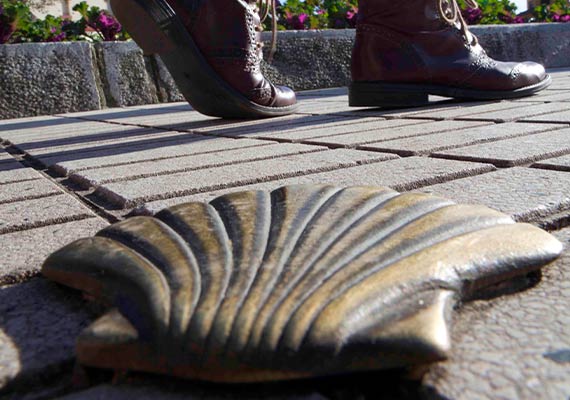
Pilgrim scallop
Travel Insurance

3rd person disccount sharing room with 2 adults: 10%
Half board supplement: 25 € / person / night
Private transfer to San Sebastián: on request
Private transfer to the airport: on request
One day tour Santiago – Fisterra: on request
One day tour Santiago – Rías Baixas & Wine Tasting: on request
One day tour Santiago – Rías Baixas, Wine Tasting & Boat Trip: on request
One day Tour Santiago – Catedrales Beach (Monday, Wednesday, Saturday): on request
One day Tour Santiago – Ribeira Sacra (Tuesday, Thursday, Saturday): on request
Extra piece of luggage: €8 per stage and piece of luggage (maximum 20 kg)
Extra nights: on request
Travel cancellation insurance
Camino de Santiago with Support
Camino del Norte from San Sebastian to Santiago

Starting at 3400 €*
Price per person in a double room
Price per person, based on double occupancy.