
Would you like to receive a personalized
quote by email?

Starting at
1100 € *

Distance
227 km

Duration
14 days / 13 nights

Difficulty
Easy – Medium

Regime
Bed and breakfast

Type of Accommodation
Private room with bathroom
Service
Backpack transport

Transfer
As marked on the itinerary
* Price per person, based on double occupancy.
Camino de Santiago with Support

Camino Portugués from Porto to Santiago
Camino Portugués from Porto to Santiago
Camino Portugués from Porto to Santiago
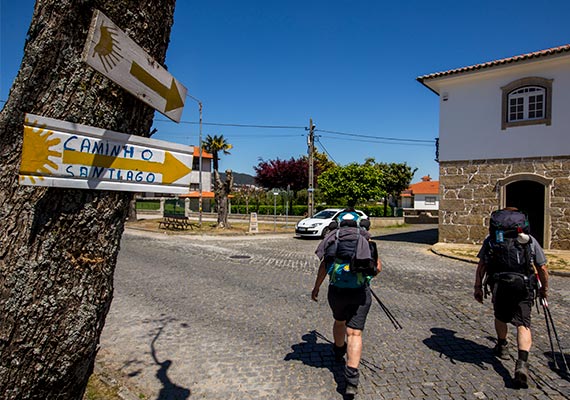
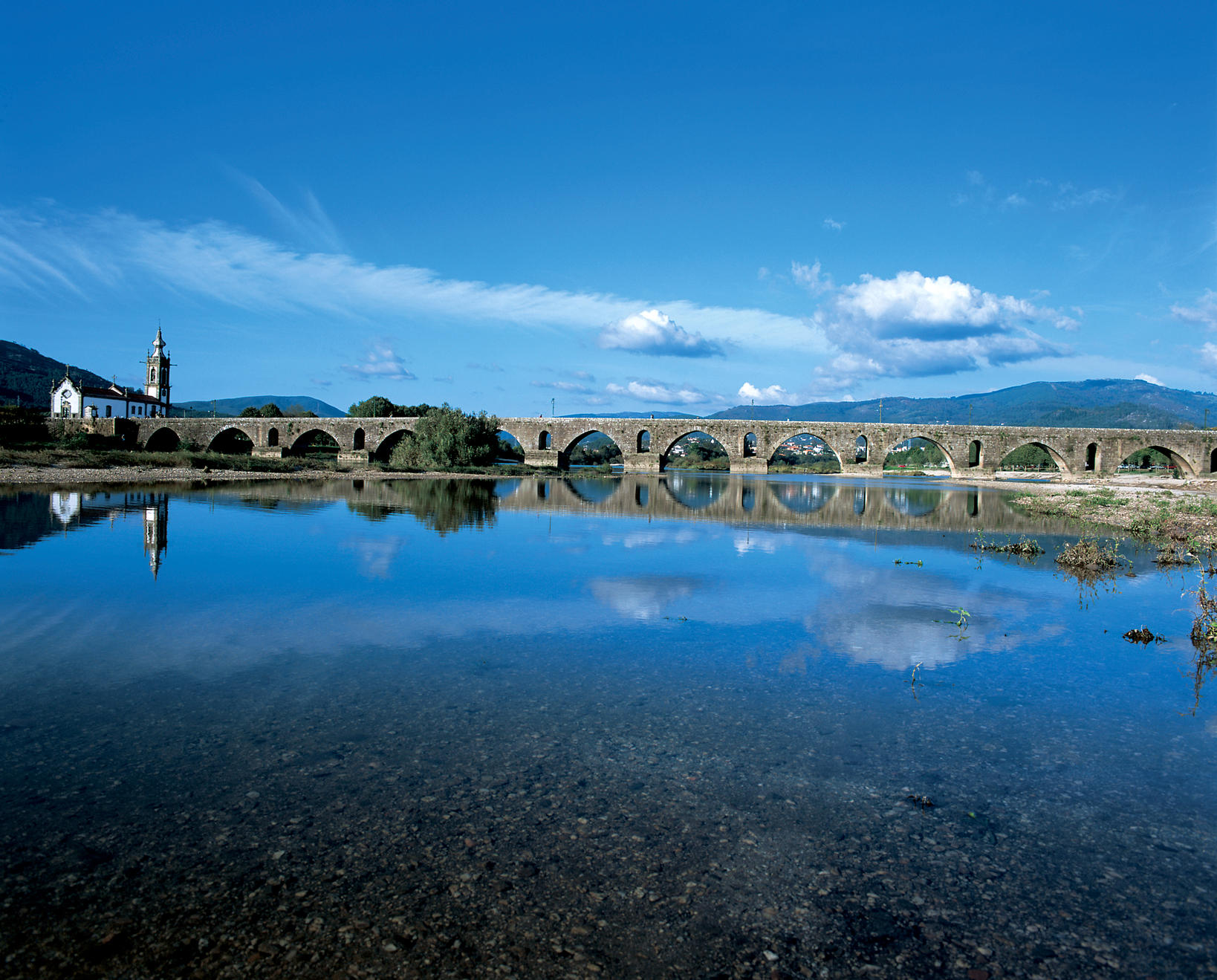
The Camino Portugués from Porto to Santiago (Camino Portugués central) is the most popular after the French Way (Camino francés). Actually, the Camino Portugues was the main Jacobean route in 19th century, due to the French Revolution and the presence of Napoléon’s troops in Spain.
History of the Portuguese Way
The relevance of his route starts after the independence of Portugal, in the 12th century. Proof of the importance of the Jacobean route in Portugal, are characters such as Doña Isabel de Portugal, in 14th century, and also known as “Raiña Santa” (Holy Queen). Or also King Manuel the 1st, during the 16th century. Both made a pilgrimage to Compostela. Isabel offered her crown in front of the altar of Santiago and later, she was buried with the pilgrim’s staff in Coimbra. After his pilgrimage, Manuel I ordered a lamp to be lit day and night in the Cathedral of Santiago, for which he fixed an annual income.
Traditionally, the Portuguese Way starts in Lisbon, but most often it starts in Porto or Tui. This option from Porto covers 112 kilometers, which we organize over a fortnight.
The Route of the Camino Portugués from Porto to Santiago
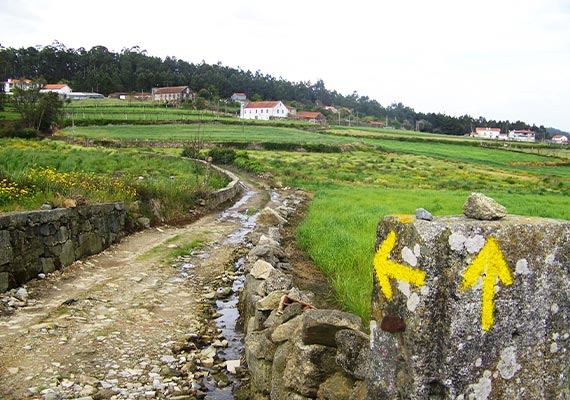
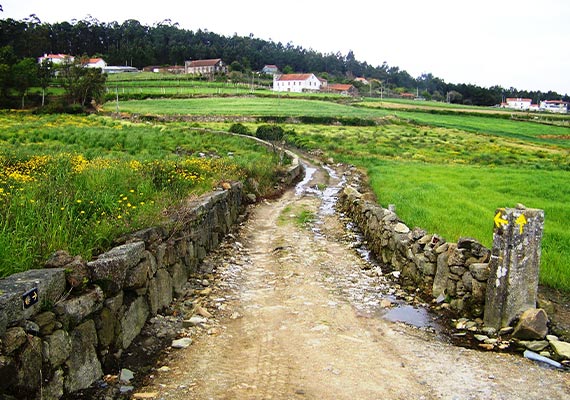
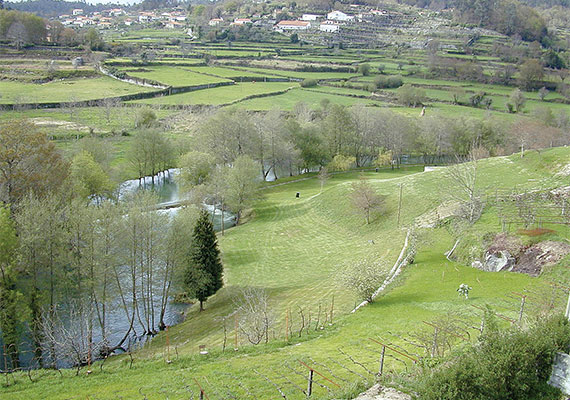
On the Camino Portugués from Porto to Santiago we cross the north of Portugal on a pleasant route with green hills and fantastic landscapes that lead us to the other side of the border, to the no less spectacular landscapes of Galicia.
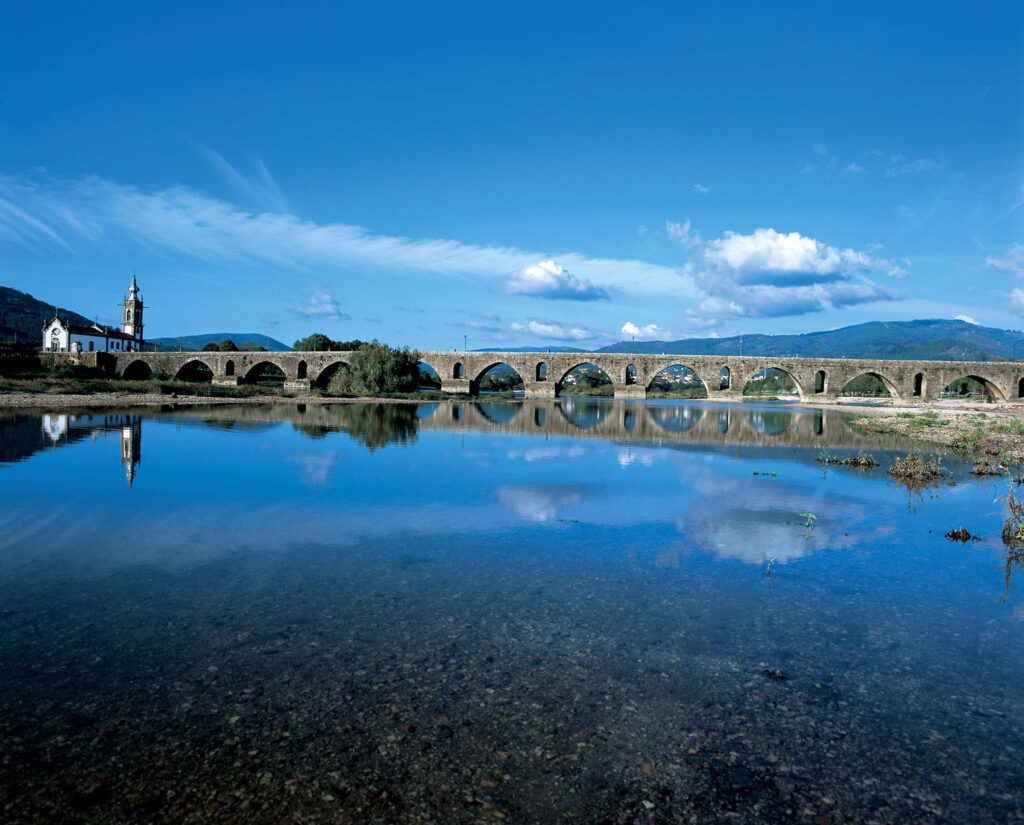
We will mainly cross agricultural areas, grain fields, vineyards, an overall rather rural environment, but also very important places such as the city of Porto, which is a UNESCO World Heritage Site, or Ponte de Lima with its historical center.
In the Galician city of Redondela, the Central Portuguese Way (inland) and the Coastal Way connect and continue the common route to Compostela.
¡BUEN CAMINO!
Porto
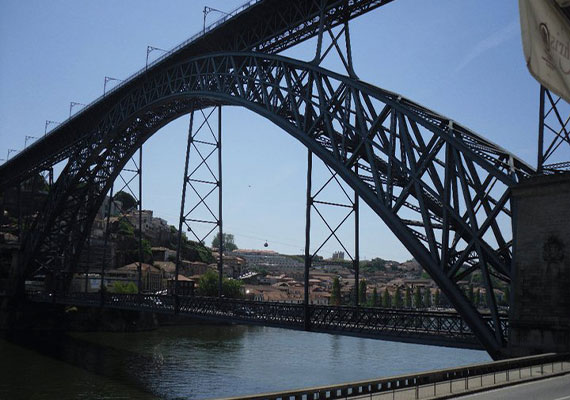
Porto is the second most important city in Portugal after Lisbon. It has been declared a UNESCO World Heritage Site and is known for its architectural appeal, its spectacular river, and its famous and delicious sweet Port wine. It is well worth spending a full day exploring this beautiful city. We are sure you will want to return.
Porto - Arcos
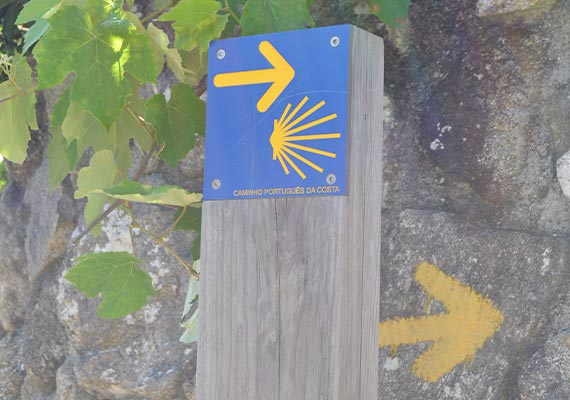
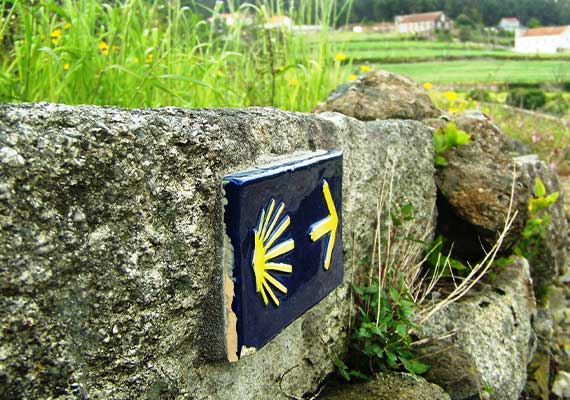
A transfer will take you from Porto to Moreira de Maia, where the first stage of this journey begins. Although this stage does not stand out for its scenic beauty, as it runs almost entirely through urban areas, it is well signposted and, as we approach Arcos, the landscape becomes more rural. One highlight along the way is the Zameiro Bridge.
Arcos - Barcelos
Barcelos - Balugaes
Today we enter a wine-growing region full of small villages, but also with paved sections. The ascent to Portela de Tamel, which is 130 meters above sea level, is the most difficult part of this day.
Balugaes - Ponte de Lima
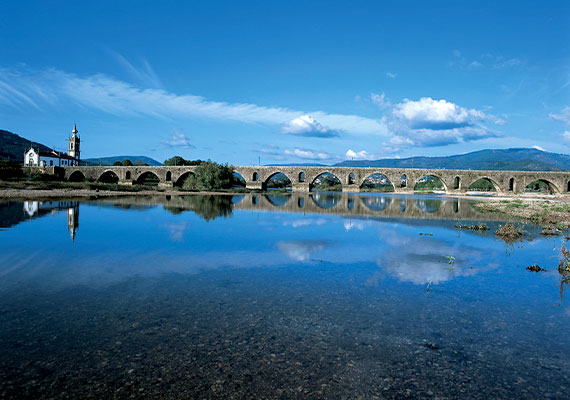
The closer we get to Galicia, the more green hills flood the landscape. The difficulty of our route remains low, with a short climb in Vitorino dos Piaes and then down to the Lima River, the river that gives its name to the town where our day ends. In Ponte de Lima, the old town is particularly worth seeing.
Ponte de Lima - Rubiaes
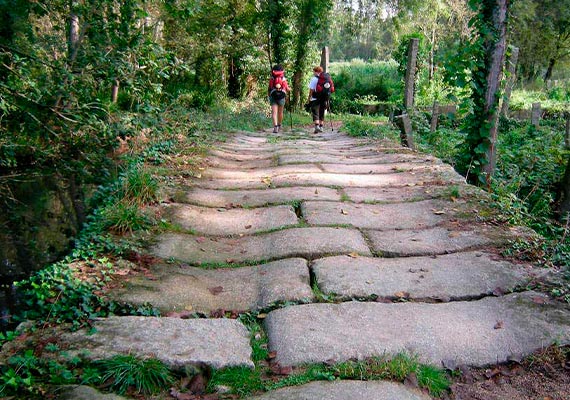
Due to the climb to Alto da Portela Grande de Labruja, which reaches 315 meters, we will have to tackle the most difficult stage of the entire route. Once this is overcome, a pleasant descent to Rubiaes begins, which follows the Roman road into the town.
Rubiaes - Tui
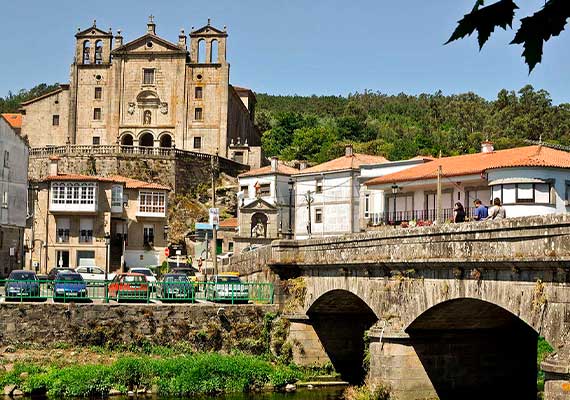
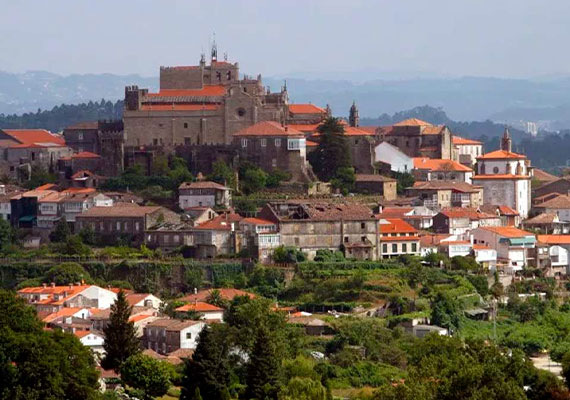
Today we leave Portugal and enter Galicia, Spain. It is a stage with moderate slopes and no major difficulties. We will cross the border between the two countries over the international bridge over the Miño River to reach Tui. In Tui, we recommend visiting the cathedral.
Tui - Porriño
This stage is probably one of the most difficult, but also the most beautiful, of the entire journey. We will cross the Miño River and climb up to Ribadelouro. It may take a while, as a large part of the route passes through paved and urban areas, but for pilgrims who prefer a more natural environment, an alternative has been provided that crosses the As Gándaras Natural Park to O Porriño. This alternative is also well marked.
Porriño - Redondela
The climbs on this stage are challenging, but the beautiful views from above reward the effort. Once we reach the charming town of Mos, we encounter the first ascent to Alto de Inxertado. Once this is overcome, we begin a gentle descent toward Redondela
Redondela - Pontevedra
We begin the stage heading toward Setefontes and Arcade (famous for its oysters). Accompanied by the Vigo estuary, we pass through lush forests until we reach the historic ‘Puente de Sampaio’ bridge on the way to Pontevedra.
Pontevedra - Caldas de Reis
A calm and pleasant route. We move away from the uneven terrain of the previous sections to enter much flatter and more level ground. We will pass through several villages until we finally reach Caldas de Rei, where pilgrims who wish to relax can unwind in one of the famous spas.
Caldas de Reis - Padrón
Today’s stage is scenic, one of the most beautiful and varied. Vineyards, grain fields, the Bermaña Valley, chestnut forests, eucalyptus… we enjoy agricultural Galicia. We arrive in Padrón, where we must not miss the opportunity to try the famous peppers.
Padrón - Santiago de Compostela
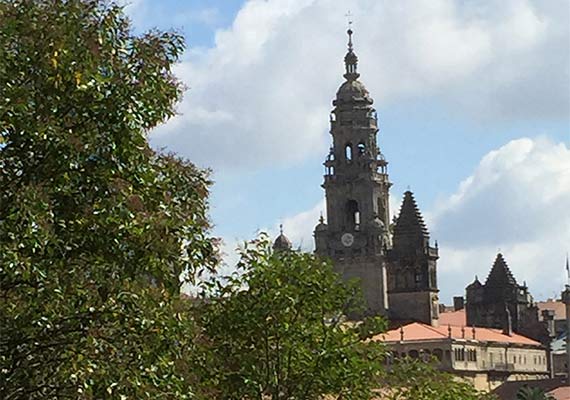
The final stage of the Camino. We will cross the N-550 road several times and follow the railway line. We first walk toward Iria Flavia and then begin a climb to ‘O Milladoiro’ to finally see the cathedral towers as we approach Santiago. Here, the desire to arrive mixes with the bittersweet feeling that this unique experience is coming to an end.
Santiago de Compostela
Day in Santiago de Compostela — the end of our services.
Buen Camino!!

Room with private bathroom
Breakfast included
Daily luggage transport from accommodation to accommodation (1 piece of luggage per person, max. 20 kg)
Guided tour of the old town of Santiago de Compostela
Typical Galician cheese tasting at a cheese shop in the old town of Santiago de Compostela.
24-hour emergency line
Detailed information with stage maps
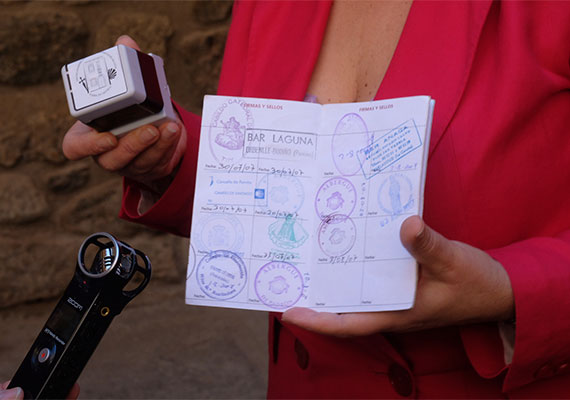
Pilgrim pass
Pilgrim scallop
Travel insurance

Half board supplement: 25 € / person / night
Private transfer to Porto: on request
Private transfer to the airport: on request
One day tour Santiago – Fisterra: on request
Day tour Santiago – Rías Baixas with a visit to a winery and wine tasting: upon request
Day tour Santiago – Rías Baixas with a visit to a winery and wine tasting, and a catamaran ride on the Ría de Arousa: upon request
One day Tour Santiago – Catedrales Beach (Monday, Wednesday, Saturday): on request
One day Tour Santiago – Ribeira Sacra (Tuesday, Thursday, Saturday): on request
Extra piece of luggage: €8 per stage and piece of luggage (maximum 20 kg)
Extra nights: on request
Travel cancellation insurance
Camino de Santiago with Support
Camino Portugués from Porto to Santiago

Starting at 1100€ *
Price per person in a double room
Price per person, based on double occupancy.