Holy Years are not just celebrated in Compostela, but if you are quite familiar with the
Camino de Santiago, you will also be familiar with the concept of Jubilee, which is closely linked to pilgrimage.In the Catholic tradition, there are three major pilgrimage destinations: Santiago de Compostela, Rome, and Jerusalem.
Each of them celebrates its own Holy Year, attracting millions of pilgrims who seek not only the absolution of their sins but also a transformative experience. Additionally, in Spain, the Monastery of Santo Toribio de Liébana also celebrates its own Jubilee.
Throughout history,
romeros, concheros, and
palmeros, the names given to
pilgrims according to their destination, have walked these sacred paths.
This year, we are celebrating the
Rome Jubilee 2025, and don’t forget that we are less than two years away from the
Holy Year of Santiago 2027.
Rome Jubilee 2025
The
Holy Year in Rome is celebrated every
25 years, a tradition established by Pope Boniface VIII in 1300. During this period,
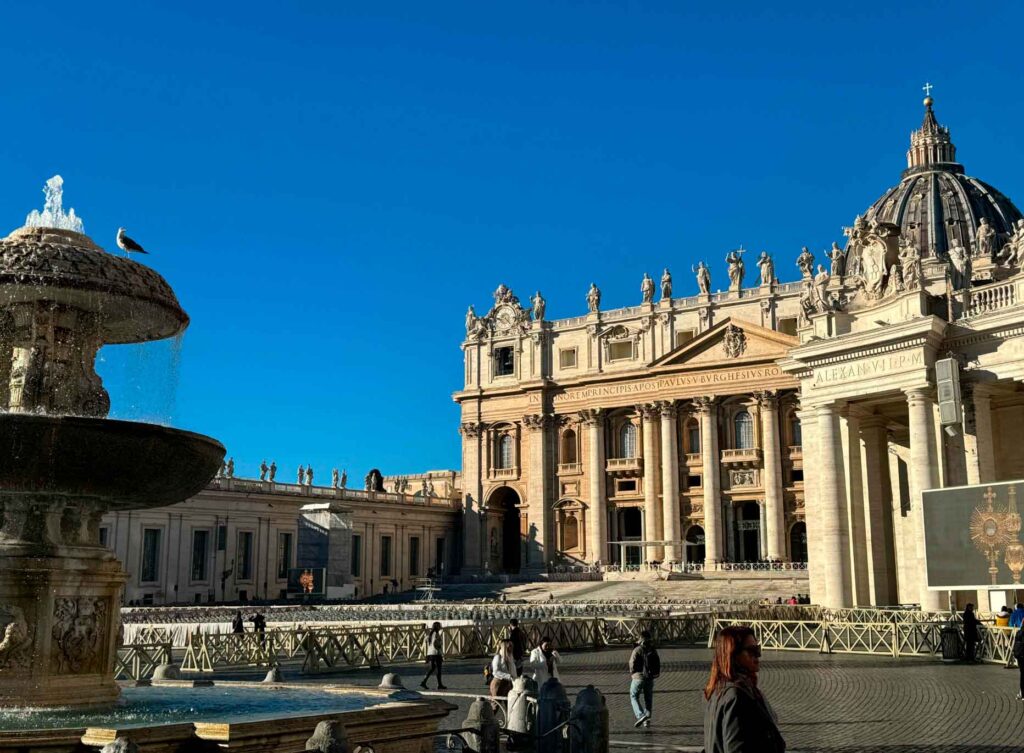
pilgrims visit the four major basilicas: St. Peter’s Basilica in the Vatican, St. John Lateran, St. Mary Major, and St. Paul Outside the Walls, passing through their
Holy Doors, which, like in
Compostela, are only opened during Jubilees.
This
2025, Rome is celebrating its Holy Year under the theme
“Pilgrims of Hope.” Millions of believers will travel to the Eternal City to obtain
plenary indulgence through
confession, the Eucharist, and prayers for the Pope.
Opening of the Holy Door and Inauguration Ceremony
The official inauguration of the
Jubilee 2025 took place on
December 24, when, just as in
Compostela with our
Holy Door in Plaza de la Quintana, Pope Francis I opened the
Holy Door of the Vatican at the main entrance of St. Peter’s Basilica. This is a heavy bronze structure designed by artist Vico Consorti, consisting of 16 panels depicting biblical scenes, originally created for the Jubilee of 1950. Before the ceremony, the brick wall covering it was dismantled, revealing the key hidden within it.
Like a domino effect, the other
Holy Doors of the Vatican’s Roman basilicas—St. John Lateran, St. Mary Major, and St. Paul Outside the Walls—were also opened. The ceremony was accompanied by a bell concert at
7:00 PM in St. Peter’s Square, performed by the Pontifical Marinelli Bell Foundry.
Exceptionally, and for the first time in jubilee tradition, Pope Francis also opened a fifth Holy Door on December 26, located inside the New Rebibbia Prison, also in Rome.
Pilgrimages and Cultural Routes in Rome
Just as with the
Camino de Santiago during
Jacobean Years,
pilgrimages will take place throughout Rome during 2025, though they are somewhat different from ours. Beyond devotion, some routes have also become cultural itineraries.
- The Seven Churches Route is a 25 km circuit covering the four papal basilicas along with St. Lawrence Outside the Walls, the Basilica of the Holy Cross in Jerusalem, and St. Sebastian Outside the Walls.
- Iter Europam is a route linking 28 churches associated with European states, such as San Pietro in Montorio (Spanish curia), Santa Maria sopra Minerva (Finland), and Santa Brigida in Campo de’ Fiori (Sweden).
Cultural Events of the Jubilee 2025
Since
1993,
Galicia has linked
Holy Years to the
Xacobeo, the cultural and tourism program launched by the Xunta de Galicia in 1991 to promote the
Jacobean Holy Year from a secular perspective, separate from the
religious celebration organized by the Church.
The success of the first
Xacobeo 1993, with events such as concerts, exhibitions, and improvements to
the Camino de Santiago, led to its consolidation as a recurring strategy in subsequent
Holy Years.
Similarly, the
Jubilee 2025 in Rome will be accompanied by a
series of cultural events throughout the year in the
Eternal City.
Renovation of Rome and the Vatican
Rome and the Vatican have seized the opportunity of the
Jubilee 2025 to launch an ambitious restoration and modernization plan for their monuments and public spaces.
Thanks to the Caput Mundi program, the Italian government has allocated 500 million euros, supplemented by 1.8 billion euros from the European Union’s Next Generation program. Some of the most awaited interventions include monuments as iconic as the Trevi Fountain, the Lovers’ Fountain, and renovations in 52 other heritage sites.
The Vatican and its Restoration Works
Within the
Vatican, key restorations have been carried out:
- Bernini’s magnificent baldachin in St. Peter’s Basilica has been cleaned and restored for the first time in 250 years.
- Improvements have also been made to the Chair of St. Peter, the ancient papal throne, which will be displayed in the sacristy of the Basilica until December 8.
The Camino de Santiago and the Holy Year Jacobeo 2027
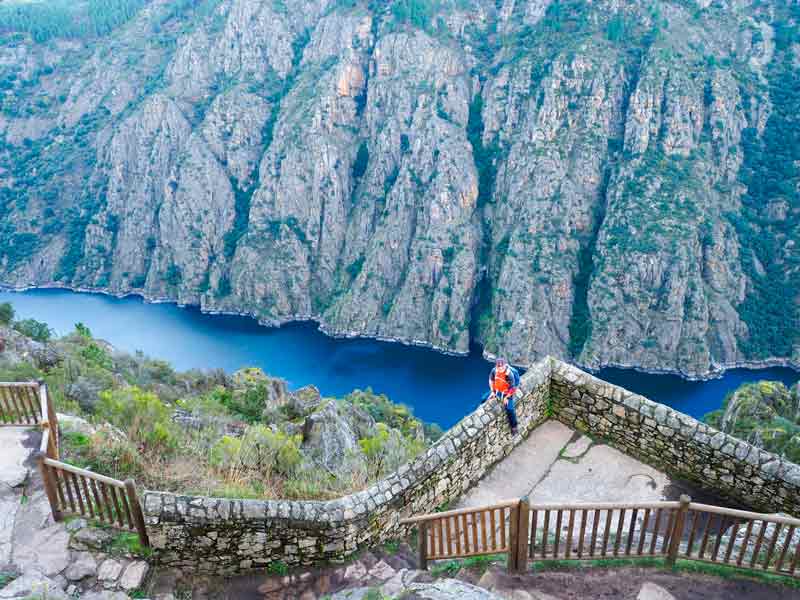
Santiago de Compostela is another
major center of Christian pilgrimage. The
Jacobean Holy Year is celebrated whenever
July 25, the feast of St. James the Apostle, falls on a Sunday.
The next
Holy Year will be in
2027, and, as in every
Año Santo, the
Holy Door of the Santiago Cathedral will be opened, allowing
“concheros” (yes, named after the shell) to gain
plenary indulgence.
Beyond
Santiago, in
Villafranca del Bierzo, the
Church of Santiago has a Door of Forgiveness for
pilgrims who are sick or have suffered an accident and cannot complete the Camino. (Note: A medical certificate is required—no tricksters allowed!).
The
Camino de Santiago is the
most important pilgrimage route in Europe, attracting hundreds of thousands of walkers each year in search of a spiritual and cultural experience.
The Liébana Jubilee and the Route of the “Cruceros”
In Cantabria, the Monastery of Santo Toribio de Liébana houses the Lignum Crucis, the
largest surviving fragment of the True Cross of Christ.
In 1512, Pope Julius II granted this sanctuary the right to celebrate a
Holy Year whenever April 16, the feast of St. Toribio, falls on a Sunday, following a similar rule to the
Jacobean Holy Year.
The next Liébana Jubilee will be in
2028.
Jerusalem and the “Palmeros” of the Holy Sepulcher
Jerusalem is the cradle of Christianity and the destination of the
palmeros, pilgrims who, in the Middle Ages, returned with a palm as a symbol of their journey.
Although the
Jubilee in the Holy Land has no fixed periodicity, pilgrimages to the Holy Sites, especially the Holy Sepulcher, hold immense spiritual significance.
Comparison of Holy Years
| Destination |
Pilgrim Name |
Jubilee Frequency |
Next Holy Year |
| Rome |
Romeros |
Every 25 years |
2025 |
| Santiago |
Concheros |
When July 25 falls on a Sunday |
2027 |
| Liébana |
Cruceros |
When April 16 falls on a Sunday |
2028 |
| Jerusalem |
Palmeros |
No fixed periodicity |
– |
The meaning of Pilgrimage
Pilgrimage is not only a physical journey but also a spiritual one.
With less than two years to go,
Santiago is preparing for
Xacobeo 2027, an unforgettable event combining spirituality, culture, and tourism.
¡Buen Camino!