When people think of Galicia, lush green landscapes, peaceful estuaries, charming towns, and unique architectural landmarks often come to mind, especially the hórreos and cruceiros.
These elements, though rooted in centuries past, remain a living part of everyday life in Galicia.
Hórreos and cruceiros are more than just architecture; they are expressions of tradition, identity, and spirituality. If you walk one of the Camino de Santiago routes through the Rías Baixas—like the Father Sarmiento Route or the Spiritual Variant of the Portuguese Way—you’ll find these symbols up close in one of Galicia’s most picturesque villages: Combarro.
Strolling through its cobbled streets feels like stepping into the soul of authentic Galicia, where land and sea are forever intertwined.
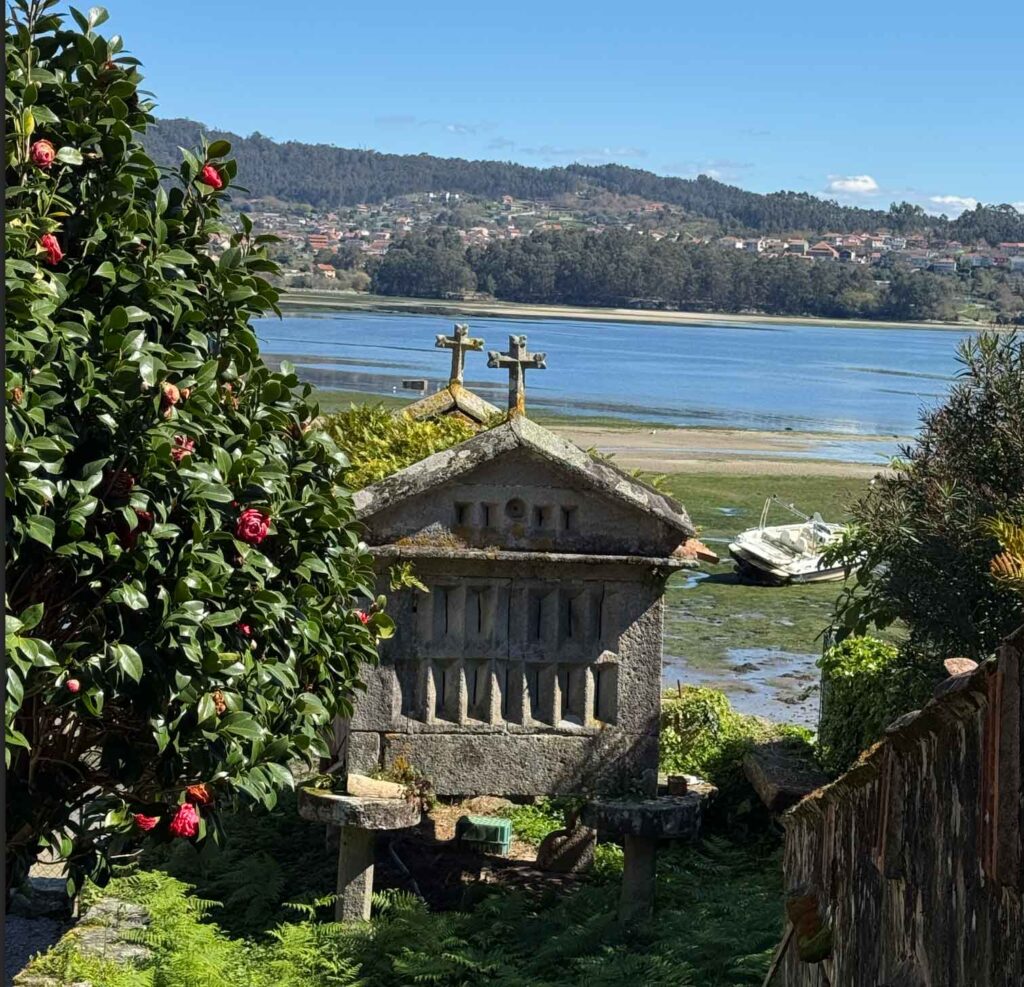
Built on stone pillars to keep out moisture and rodents, these structures once stored corn, dried fish, and farming tools. Many date back to the 18th and 19th centuries and showcase how Galician folk architecture adapted to a dual life of farming and fishing.
Seeing them at sunset, silhouetted against the waters of the Pontevedra estuary, is one of those unforgettable moments that make the trip worthwhile. If you’re planning to visit Galicia, Combarro is a must on your itinerary.
Often found in squares, at crossroads, or beside churches, these granite crosses reflect the deep-rooted spirituality of Galician culture. While strongly associated with Christianity, they also have pagan origins.
There are said to be over 10,000 cruceiros in Galicia, with some dating back to the 14th century.
Combarro is home to seven cruceiros, each following a distinctive pattern: the figure of Christ faces inland, while the Virgin looks out to sea, symbolically protecting sailors. One of the most iconic stands in San Roque Square, next to the church that shares its name.
These crosses were placed for protection, as offerings, to request miracles, or to commemorate significant events. They also served as waymarkers—especially meaningful in a land crisscrossed by the Camino de Santiago.
Similar stone crosses can also be found in Ireland and Brittany—regions, like Galicia, shaped by Celtic influence. It’s likely these sacred symbols arose from a fusion of ancient Celtic beliefs and later Christian traditions, a convergence seen across all three regions.
The trail passes through breathtaking locations such as Sanxenxo, O Grove, A Lanzada, and of course, Combarro.
This path is rich in history, traditional architecture, and coastal beauty—perfect for those seeking a peaceful Camino experience away from the busier routes.
From Pontevedra, the route veers toward the Monastery of Poio, continues through Combarro, and heads to the Monastery of Armenteira. From there, pilgrims travel by boat from Vilanova de Arousa along the world’s only maritime-river Way of the Cross, marked by 17 cruceiros rising from the water, until they reach Pontecesures, where the journey continues on foot to Santiago.
It’s seeing fishermen’s homes with colorful wooden balconies, hearing bagpipes during a local festival, or watching the tide recede at Praia do Padrón to reveal hidden paths of sand and rock.
If you have extra time, consider visiting nearby landmarks like the Monastery of San Xoán de Poio or the lively historic center of Pontevedra. Galicia is meant to be walked—and felt Every corner of Galicia tells a story—sometimes a legend, often a miracle.
Places like Combarro, with its hórreos and cruceiros by the sea, are living proof of that.
If you’re planning to walk the Camino de Santiago, we invite you to discover one of its most magical detours—where faith, history, food, and nature come together in pure harmony.
With Rutas Meigas, you can explore Galicia step by step—whether on the Father Sarmiento Route, the Spiritual Variant of the Portuguese Way, or any of the many authentic trails and experiences that this mystical land has to offer.
These elements, though rooted in centuries past, remain a living part of everyday life in Galicia.
Hórreos and cruceiros are more than just architecture; they are expressions of tradition, identity, and spirituality. If you walk one of the Camino de Santiago routes through the Rías Baixas—like the Father Sarmiento Route or the Spiritual Variant of the Portuguese Way—you’ll find these symbols up close in one of Galicia’s most picturesque villages: Combarro.
Combarro: A seaside gem in the Rías Baixas
Just 6 kilometers from Pontevedra, in the heart of the Rías Baixas, lies Combarro—a village that seems frozen in time. Declared a Site of Cultural Interest, its historic center brings together three of Galicia’s most iconic architectural features: hórreos, cruceiros, and traditional coastal fishermen’s houses known as casas mariñeiras.Strolling through its cobbled streets feels like stepping into the soul of authentic Galicia, where land and sea are forever intertwined.
The Hórreos of Combarro: a living postcard
Combarro is world-renowned for its seaside hórreos. No fewer than sixty of these raised granaries are preserved in the village—over thirty of them line the shoreline, creating a postcard-perfect view that’s famous across the globe.Built on stone pillars to keep out moisture and rodents, these structures once stored corn, dried fish, and farming tools. Many date back to the 18th and 19th centuries and showcase how Galician folk architecture adapted to a dual life of farming and fishing.
Seeing them at sunset, silhouetted against the waters of the Pontevedra estuary, is one of those unforgettable moments that make the trip worthwhile. If you’re planning to visit Galicia, Combarro is a must on your itinerary.
Cruceiros: faith and tradition carved in stone
As emblematic as the hórreos, Galicia’s cruceiros are stone crosses that blend seamlessly into the region’s landscapes—and its history.Often found in squares, at crossroads, or beside churches, these granite crosses reflect the deep-rooted spirituality of Galician culture. While strongly associated with Christianity, they also have pagan origins.
There are said to be over 10,000 cruceiros in Galicia, with some dating back to the 14th century.
Combarro is home to seven cruceiros, each following a distinctive pattern: the figure of Christ faces inland, while the Virgin looks out to sea, symbolically protecting sailors. One of the most iconic stands in San Roque Square, next to the church that shares its name.
These crosses were placed for protection, as offerings, to request miracles, or to commemorate significant events. They also served as waymarkers—especially meaningful in a land crisscrossed by the Camino de Santiago.
Similar stone crosses can also be found in Ireland and Brittany—regions, like Galicia, shaped by Celtic influence. It’s likely these sacred symbols arose from a fusion of ancient Celtic beliefs and later Christian traditions, a convergence seen across all three regions.
Combarro on the Camino: The Father Sarmiento Route
Combarro is a highlight of the Father Sarmiento Route, one of the most scenic and lesser-known routes of the Camino de Santiago. While not officially recognized by the Cathedral of Santiago, this route retraces the journey of the Benedictine monk Martín Sarmiento, who in 1745 walked from Pontevedra to Santiago de Compostela along the southern Galician coast.The trail passes through breathtaking locations such as Sanxenxo, O Grove, A Lanzada, and of course, Combarro.
This path is rich in history, traditional architecture, and coastal beauty—perfect for those seeking a peaceful Camino experience away from the busier routes.
The Spiritual Variant of the Portuguese Camino
Combarro is also part of the Spiritual Variant of the Portuguese Camino, a beautiful detour that links the traditional Portuguese Way with the Traslatio—the legendary journey of the Apostle James’ remains, said to have arrived in Galicia by stone boat.From Pontevedra, the route veers toward the Monastery of Poio, continues through Combarro, and heads to the Monastery of Armenteira. From there, pilgrims travel by boat from Vilanova de Arousa along the world’s only maritime-river Way of the Cross, marked by 17 cruceiros rising from the water, until they reach Pontecesures, where the journey continues on foot to Santiago.
Combarro: a small town full of big experiences
Visiting Combarro isn’t just about admiring hórreos and cruceiros. It’s about wandering its narrow alleys, enjoying fresh seafood or empanada on a terrace overlooking the sea, and soaking in the rhythm of village life.It’s seeing fishermen’s homes with colorful wooden balconies, hearing bagpipes during a local festival, or watching the tide recede at Praia do Padrón to reveal hidden paths of sand and rock.
If you have extra time, consider visiting nearby landmarks like the Monastery of San Xoán de Poio or the lively historic center of Pontevedra. Galicia is meant to be walked—and felt Every corner of Galicia tells a story—sometimes a legend, often a miracle.
Places like Combarro, with its hórreos and cruceiros by the sea, are living proof of that.
If you’re planning to walk the Camino de Santiago, we invite you to discover one of its most magical detours—where faith, history, food, and nature come together in pure harmony.
With Rutas Meigas, you can explore Galicia step by step—whether on the Father Sarmiento Route, the Spiritual Variant of the Portuguese Way, or any of the many authentic trails and experiences that this mystical land has to offer.