
Organized Camino de Santiago
At Rutas Meigas, we’ve been walking by your side for over 25 years. We are the organized Camino de Santiago travel agency that turns your journey into an unforgettable experience, without stress, surprises, or worries.
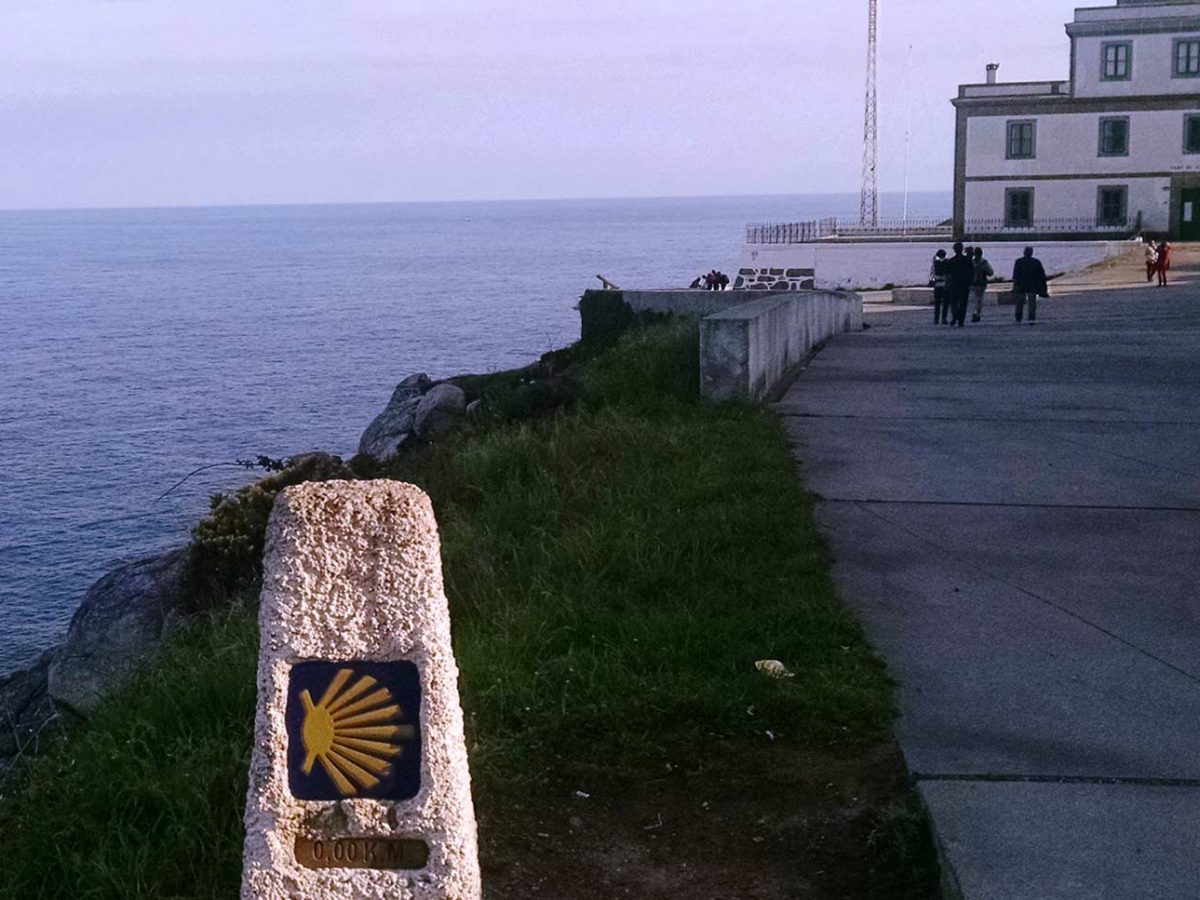
We are the organized Camino de Santiago agency you were looking for.
At Rutas Meigas, we’ve been walking by your side for over 25 years. We are the organized Camino de Santiago travel agency that turns your journey into an unforgettable experience, without stress, surprises, or worries.
Our job is to take care of every detail you need to enjoy your Camino with total peace of mind. We handle accommodations, luggage transfers, provide informative stage-by-stage maps, offer 24/7 emergency assistance, and even suggest the best places to stop and enjoy a great meal.
Organizing your Camino de Santiago with Rutas Meigas goes far beyond logistics. It means walking with the confidence of knowing there’s a team of professionals behind you, people who are also pilgrims and understand the Camino from the inside.
If you’re looking for a Camino de Santiago travel agency that knows what it’s doing and treats you the way you deserve, you’ve just found it!!
Buen Camino!
 Want more info?
Why it’s important to plan your Camino de Santiago
What can go wrong if you don’t organize your Camino
Doing the Camino de Santiago without any planning might sound adventurous, but today, it’s a bit medieval. Once you start walking, reality hits: painful blisters, getting lost, or arriving at the end of a long stage to find there are no beds available for kilometers.
Without proper planning, you may end up walking endless stages without realizing it, staying in last-minute accommodations, or spending more time solving problems than actually enjoying the Camino as you deserve.
And without solid logistics, carrying your full backpack or not finding transport can turn a beautiful journey into unnecessary suffering.
If your goal is to truly live the Camino—not just survive it—leave it in expert hands.
Our organized Camino de Santiago tours
At Rutas Meigas, we design organized Camino de Santiago experiences for every kind of pilgrim.
Are you a first-timer? Traveling in a group? Looking for something spiritual, scenic, or even food-focused?
We tailor your Camino to your needs, from the classic French Way from Sarria to Santiago, to the Spiritual Variant of the Portuguese Route, or the breathtaking Original Way, the first Camino ever walked in the 9th century by Alfonso II the Chaste.
At Rutas Meigas, we take care of it all: handpicked accommodations, luggage transfers, detailed maps, 24/7 emergency phone support, and many other optional services. You can even do the Camino de Santiago with support.
You just need to walk… and enjoy the journey.
 Want more info?
Why walk the self guided Camino with Rutas Meigas
We know you have plenty of options, but few offer a Camino de Santiago experience as carefully curated as ours. At Rutas Meigas, we don’t just organize your journey, we walk it with you, step by step.
We are a dedicated organized Camino de Santiago travel agency, based in Santiago de Compostela, and we truly know the Way, because our team is made up of real pilgrims.

We walk with you from day one
At Rutas Meigas, we don’t just plan your Camino, we live it with you. From the moment you start dreaming of the experience until you arrive in Santiago (or even Finisterre or Muxía), we’re by your side, helpingo, organizing, and solving doubts. Before, during, and after your journey.

Pilgrims organizing for pilgrims
We’re a Camino de Santiago travel agency with Galician roots, an international team, and real-world experience. Our staff is made up of pilgrims from different countries who have walked the routes and know every stage. We handpick accommodations, services, and itineraries with one clear goal: that you live the best Camino possible.

Human, honest, and transparent service
We believe in fast, clear, and friendly communication. If something changes during your Camino, we adapt. Need to modify a stage? Have a question? Just call us, we’re here to help.

Full flexibility and ongoing support
Every pilgrim is unique. That’s why we offer personalized routes and custom solutions. And during your Camino de Santiago, you’ll have 24/7 phone assistance in case of emergencies. You walk freely, self guided, but never completely alone.
What do they say about us?


Some questions?
We take care of accommodations, luggage transport, and all the details that make the difference so that the Camino is the perfect one for you.
The best stories of the Camino and other routes

O Camiño do Monxe: 5-Day Ribeira Sacra hiking trail
O Camiño do Monxe is a 5-day, 4-night Ribeira Sacra hiking route in Galicia, following in the footsteps of the hermit monks who once lived in this sacred canyon. Across three hiking stages (around 60 km), walkers pass ancient monasteries, terraced “heroic” vineyards and dramatic viewpoints over the Sil canyon, finishing with a night at the Parador of Santo Estevo, a former monastery. Organised by Rutas Meigas, the route includes accommodation, breakfast and luggage transfers, from €600 per person.
Long before the first maps of the Camino de Santiago were drawn, men and women fled the world to seek God in the silence of a canyon. They settled on the steep banks of the Sil and Miño rivers, carved cells into the rock, planted impossible vineyards on near-vertical slopes, and over the centuries turned a wild territory into one of the most sacred landscapes in Galicia: the Ribeira Sacra.
From that legacy comes O Camiño do Monxe, a hiking route through the Ribeira Sacra that does more than cross spectacular scenery — stage by stage, it retraces the contemplative life of the first monks who turned rock and water into a dwelling place for faith.
The origins of the Ribeira Sacra monasteries: when silence became faith
From the earliest centuries of Christianity, hermits and monks sought refuge in the deep canyons carved by the Sil and Miño rivers as they cut through southern Lugo and northern Ourense. They dug out caves, built rock-hewn chapels and founded small monastic communities in places of almost inaccessible beauty. That ascetic calling gave the territory its name: Ribeira Sacra, the “sacred riverbank,” a name already recorded in writing since the 12th century.
Isolation wasn’t a whim. For those early anchorites, the canyon was the perfect place to disappear from the world. The vertical slate walls and river bends hid any settlement and protected a silence broken only by water. Over the centuries, those solitary cells grew into full monasteries — some Benedictine, some Cistercian — that went on to amass enormous economic and spiritual power, largely through control of the land and, above all, of wine.
It was these same monks who, generation after generation, revived the vine-growing tradition the Romans had started, carving impossible terraces into the canyon slopes to create what’s known today as heroic viticulture. Monasteries such as San Paio, Santa Cristina de Ribas de Sil and Santo Estevo de Ribas de Sil are stone witnesses to that contemplative life — and these are precisely the places that mark the stages of O Camiño do Monxe today.
Walking these trails today is, in a way, repeating what generations of monks have done for over a thousand years. Descending to the river, climbing the hillside, or pausing at a viewpoint feels like the landscape itself becoming a form of prayer.
O Camiño do Monxe in 5 Days: for those without two weeks to spare
Not everyone can take two weeks off to complete O Camiño do Monxe’s full 9-day route. That’s why this 5-day, 4-night version exists — designed for anyone who wants to experience the essence of Ribeira Sacra hiking in fewer stages. Three full days of walking, around 60 km in total, two emblematic monasteries, terraced vineyards perched over the void, and a final night sleeping in a National Parador housed in a thousand-year-old monastery.
The difficulty level is moderate, no previous multi-day trekking experience is required, and Rutas Meigas takes care of everything else. Our hiking experience includes accommodation, breakfast and luggage transfer between stages, so the only thing you need to worry about is putting one foot in front of the other.
Day by day: canyons, vineyards and monasteries
The route begins in Castro Caldelas, a village dominated by an imposing medieval castle that already hints at the grandeur of the landscape to come.
The first hiking stage descends toward the Val de Abeleda, home to the silent ruins of the Monastery of San Paio, surrounded by some of the most respected wineries of the Ribeira Sacra D.O. The stage ends at A Fábrica da Luz, a former hydroelectric plant converted into accommodation beside the famous walkways over the River Mao — a place where the sound of water replaces every other noise.
On the second day we walk alongside the River Sil, through the spectacular terraces of heroic viticulture. Passing the incredible Balcones de Madrid viewpoint, the trail leads to the Monastery of Santa Cristina de Ribas de Sil, and shortly after to the viewpoint known as A Mirada Máxica — one of those spots where the canyon opens up and, for a moment, time seems to stand still.
On the third and final hiking day, the Sil continues to set the pace, this time from above. We’ll pass the O Cotarro viewpoint, the highest in the canyon, along with the viewpoints of Cabezoá, A Columna, Vilouxe and Pé do Home, each offering some of the most breathtaking panoramas in all of Galicia. The route ends at the Monastery of Santo Estevo de Ribas de Sil, today a National Parador, where you’ll sleep among the very stones that once sheltered its monks.
Each stage is designed so the walking pace matches the rhythm of the landscape: cool mornings among chestnut and oak trees, open midday hours through vineyards, and the last hours of daylight saved for the great viewpoints, when the sun sets over the Sil canyon and the vine terraces turn gold. It’s no coincidence that many hikers describe these sunsets as the true highlight of the route — even above the monasteries themselves.
What’s included in this Camiño do Monxe Experience
This version of O Camiño do Monxe includes accommodation with private bathroom, breakfast, luggage transfer between stages (maximum 20 kg per bag), transfers according to the itinerary, a 24-hour emergency line, maps and GPS tracks for each stage, pilgrim credential and travel insurance. Prices start from €600 per person in a double room.
Who is the 5-Day Camiño do Monxe for?
O Camiño do Monxe in 5 days is designed both for experienced hikers looking for a new Galicia hiking route to complete in a short time, and for anyone tackling a multi-day route for the first time who wants to start with a shorter one. Only a moderate fitness level is required. No technical experience or previous long-distance walking is needed — just the desire to walk and let yourself be surprised by one of the most magical corners of inland Galicia.
Frequently Asked Questions about O Camiño do Monxe
How many days does the short version of O Camiño do Monxe take?
This version lasts 5 days and 4 nights, with 3 full days of hiking.
What’s the total distance of the route?
The total distance is around 60 km, split across three stages of between 19 and 21 km each.
How difficult is it?
The difficulty is moderate. No technical knowledge or previous long-distance experience is required — just a reasonable level of fitness.
Where does the route start and finish?
The route starts in Castro Caldelas and ends at the Monastery of Santo Estevo de Ribas de Sil, today a National Parador.
Can you reach the starting point by public transport?
You can take the train to Ourense and then a private transfer to Castro Caldelas.
What’s included in the price from €600?
It includes accommodation with private bathroom, breakfast, luggage transport, transfers according to the itinerary, map, credential, stage tracks and travel insurance.
Is this route suitable for someone who has never done a multi-day trail before?
Yes, it’s an ideal option for those starting out in multi-day trekking, since Rutas Meigas handles the logistics, accommodation and luggage.
What’s the best time of year for Ribeira Sacra hiking on O Camiño do Monxe?
You can hike O Camiño do Monxe all year round, though spring and autumn offer the most pleasant walking conditions. In autumn, the whole Ribeira Sacra area turns incredible colours.

Ribeira Sacra Monasteries: the story behind O Camiño do Monxe
The Ribeira Sacra is home to more than twenty historic monasteries, though only a handful survive today. Seven mark the stages of O Camiño do Monxe’s 9-day route — San Paio de Abeleda, Santa Cristina de Ribas de Sil, Santo Estevo de Ribas de Sil (now a National Parador), San Pedro de Rocas (Galicia’s oldest monastic site, dating to 573), Santa María de Xunqueira de Espadañedo, Santa María de Montederramo and San Juan de Camba — while the 5-day route, a shorter Ribeira Sacra hiking option, passes three of them: San Paio de Abeleda, Santa Cristina de Ribas de Sil and Santo Estevo de Ribas de Sil.
In our last post we told the story of the monks who gave the Ribeira Sacra its name. Today it’s time to focus on the stone protagonists themselves — the monasteries that, for over a thousand years, have shaped the spiritual, economic and scenic pulse of this region.
Each one has its own history, its own founding century still debated by historians, and its own more or less direct connection to the hiking routes that cross the area, such as O Camiño do Monxe, and also to the **Camino de Santiago**, since part of the **Camino de Invierno** also runs through areas of the Ribeira Sacra.
San Paio de Abeleda: the Monastery that refuses to disappear
This is the first monastery you’ll find on O Camiño do Monxe, on both the 5-day and 9-day routes, between Castro Caldelas and Fábrica da Luz, on the way to Val de Abeleda.
Historians disagree on its origins. Some place it in the 10th century, when the family of the nobleman San Rosendo is documented as the landowner; others prefer to date it to the 12th century, when the church still standing today was built.
What we do know for certain is its decline. Mendizábal’s confiscation laws in the 19th century left it without a religious community, though its church remained a parish. In 1872 it was acquired by the House of Alba, and in 1972 it closed permanently to worship.
Today, San Paio de Abeleda is a Romanesque ruin of strange beauty, its original doorway and capitals — carved with plant and animal motifs — still visible, surrounded by vineyards and silence.
Thanks to local non-profit associations, the site is kept minimally preserved, preventing it from disappearing altogether.
Santa Cristina de Ribas de Sil: romanesque architecture embracing the river
The second day of O Camiño do Monxe leads to one of the most admired Romanesque complexes in all of inland Galicia: the Monastery of Santa Cristina de Ribas de Sil, in the Merilán chestnut grove beside the River Sil, in the municipality of Parada de Sil. Its origins are, again, uncertain. Some documents suggest a community of hermits was already present in the 9th or 10th century, while the current church — one of the finest examples of rural Galician Romanesque — dates from the late 12th to early 13th century.
For centuries it was an independent Benedictine monastery, until in 1508 it was reduced to a priory dependent on Santo Estevo de Ribas de Sil, following a monastic reform that reorganised much of Galicia’s monastic life. That change in status marked the start of its decline. The confiscation of 1835 turned it into a simple, privately owned farm.
Today the church, the tower and part of the cloister survive, minimally restored and open to the public. You can still see the so-called armarium claustri — niches in the wall where the monks kept their books — along with capitals carved with plant motifs that have survived eight centuries intact.
Nearby, several viewpoints, such as Cabezoás, let you take in the Sil canyon from above before continuing the route.
Santo Estevo de Ribas de Sil: from refuge of nine bishops to National Parador
The third stage of O Camiño do Monxe in 9 days ends at one of the great icons of the Ribeira Sacra: Santo Estevo de Ribas de Sil. On the 5-day route, this is the high point and the finish line of the three hiking stages.
It’s the most monumental monastery in the whole Ribeira Sacra. Tradition attributes its origins to San Martiño de Dumio in the 6th century, although the first documented reference dates to the year 921, when King Ordoño II handed the site — then in ruins — to Abbot Franquila to rebuild monastic life there.
The monastery became famous in the 10th and 11th centuries thanks to a curious legend: nine Galician bishops, some fleeing the Muslim advance and others simply seeking a peaceful retreat, settled here to spend their final years. On their deaths, each left his bishop’s ring as an offering to the monastery, and all were buried in what’s now known as the Cloister of the Bishops, today one of the building’s most photographed corners.
After the reform of the Catholic Monarchs in 1499, the monastery passed to the Congregation of San Benito and began a deep architectural transformation that continued until the 18th century, giving rise to the three cloisters that coexist under one roof today: Romanesque, Gothic and Renaissance. Declared a Historic-Artistic Monument in 1923 and a Site of Cultural Interest in 1985, the building was restored in the late 20th century and reopened in 2004 as a National Parador de Turismo, with 77 rooms spread across its former cloisters.
This is where those hiking O Camiño do Monxe in 5 days spend their final night — or one of the intermediate nights if hiking O Camiño do Monxe in 9 days. Yes, you’ll sleep among the very stones that once sheltered bishops, monks and hermits.
San Pedro de Rocas: the cradle of Galician Monasticism
On the 5-day route, San Pedro de Rocas falls outside the walking trail, while on O Camiño do Monxe in 9 days it becomes the highlight of the fourth stage, between Santo Estevo and Esgos. After a steep climb from Santo Estevo, the trail reaches this extraordinary site.
Carved directly into the granite rock of Mount Barbeirón, in the municipality of Esgos (Ourense), San Pedro de Rocas is considered the oldest monastic complex in Galicia and one of the oldest in Spain. A founding inscription found at the site itself, now kept at the Archaeological Museum of Ourense, dates its origins to the year 573, when five hermit monks withdrew here to live a life of solitary prayer.
Its three naves, carved straight into the rock, lack the elegance of later Romanesque temples — they’re rough, primitive, almost earthbound. And that roughness is precisely its greatest treasure, because here you can literally touch the skin of the oldest monasticism on the Iberian Peninsula.
The site was declared a Historic-Artistic Monument in 1923 and today houses a Ribeira Sacra interpretation centre in the former 17th-century prior’s house.
Santa María de Xunqueira de Espadañedo: a Stop with medieval flavour
The fifth stage of O Camiño do Monxe in 9 days, between Esgos and Maceda, takes you to one of the lesser-known monasteries of the Ribeira Sacra: Santa María de Xunqueira de Espadañedo. Its history has left a fascinating mix of architectural styles, from Romanesque to Baroque.
This Cistercian monastery began as an early medieval community that became Benedictine in the 12th century. By the end of that same century it joined the Cistercian order, linked to the nearby monastery of Montederramo.
From the medieval period, its basilica-plan church survives, with three naves and semicircular apses.
The current altarpieces also reflect the monastery’s evolution and the influence of the Counter-Reformation. The iconography centres on the Virgin Mary and the celebration of Western monasticism, represented by Saint Benedict of Nursia and Saint Bernard in the Baroque altarpieces.
Santa María de Montederramo: the spiritual heart of the Ribeira Sacra
The sixth stage of O Camiño do Monxe in 9 days runs from Maceda to Montederramo and ends at the Monastery of Santa María de Montederramo.
Considered the spiritual heart and one of the most important monasteries in the whole Ribeira Sacra, Montederramo marks the long route’s great leap into the interior of the region. The monastery’s documented history goes back to a charter dated 21 August 1124, granted in Allariz by Doña Teresa of Portugal. In it, the infanta granted Abbot Arnaldo and the Benedictine monks accompanying him a place called Rivoira Sacrata (or Roboira Sacrata) to found a monastery there, also reserving the monks’ right to relocate if they considered it more convenient. That first settlement wasn’t in today’s town of Montederramo, but near Leboreiro, in the area of Seoane Vello, under the patronage of Saint John and Benedictine observance; only later, once integrated into the Cistercian order, did the monastery take the name Santa María and move to its final location. You’ll find a fragment of this founding document in your Carta Sacra.
After following the Sil and visiting some of its best-known monasteries, the route continues into a territory where the monastic presence once again takes centre stage.
San Juan de Camba: the last monastery before closing the loop
The seventh and final stage of O Camiño do Monxe in 9 days runs from Montederramo back to Castro Caldelas. Before returning to the starting point, the trail passes the Capela das Neves and the Monastery of San Juan de Camba.
It’s the last of the route’s seven monastic stops and the one that closes a circular itinerary that has crossed much of the Ribeira Sacra’s historic territory.
Santa María de Ferreira de Pantón: one more Monastery to extend the experience
A short drive from Monforte de Lemos lies another of the Ribeira Sacra’s great monasteries, Santa María de Ferreira de Pantón, popularly known as the Monastery of the Bernardas. Its first documented references date back to the 10th century, when it was a family-run Benedictine monastery; two centuries later it joined the Cistercian order, and its Romanesque church was built in the 12th century, while the cloister dates from the 15th. The remaining buildings were added in the 18th century.
What makes this monastery unique isn’t just its architecture but its continuity — it’s the only enclosed community of nuns in all of Galicia to have maintained religious life uninterrupted from its founding to today, untouched by Mendizábal’s confiscation laws. The Cistercian nuns who still live there make traditional sweets and liqueurs, and welcome visitors to see part of the grounds and their beautiful Romanesque church, declared a National Monument in 1975.
If you want to extend your experience beyond the O Camiño do Monxe route, Ferreira de Pantón remains an excellent complementary visit.
FAQs about the Ribeira Sacra Monasteries and O Camiño do Monxe
How many monasteries are there in the Ribeira Sacra?
It’s estimated that there were once more than twenty monasteries and priories in the region, though today only a few remain in good condition or are open to visitors.
How many monasteries does O Camiño do Monxe in 9 days pass?
Seven monasteries form part of the seven-stage route: San Paio de Abeleda, Santa Cristina de Ribas de Sil, Santo Estevo de Ribas de Sil, San Pedro de Rocas, Santa María de Xunqueira de Espadañedo, Santa María de Montederramo and San Juan de Camba.
And how many monasteries does the 5-day route pass?
Three: San Paio de Abeleda, Santa Cristina de Ribas de Sil and Santo Estevo de Ribas de Sil, one for each hiking stage.
Which is the oldest monastery in the Ribeira Sacra?
San Pedro de Rocas, in Esgos, whose origins date back to the year 573 according to the founding inscription kept at the Archaeological Museum of Ourense.
Can you sleep in a Ribeira Sacra monastery?
Yes. The Monastery of Santo Estevo de Ribas de Sil is now a National Parador de Turismo. On the 5-day route you spend your last night there, and on the 9-day route it’s part of the third stage.
What’s the main difference between the 5-day and 9-day O Camiño do Monxe?
The 5-day route concentrates the journey into three hiking stages and three monasteries around the Sil. The 9-day version includes seven stages passing through seven monasteries.
Is there a Ribeira Sacra monastery with active religious life today?
Yes. Santa María de Ferreira de Pantón, home to Cistercian nuns known as the Bernardas, has kept monastic life going uninterrupted since the Middle Ages.
Is entry to these monasteries free?
It depends on each site. For example, San Paio de Abeleda and San Pedro de Rocas can be visited freely, while Santa Cristina charges a small symbolic entrance fee.
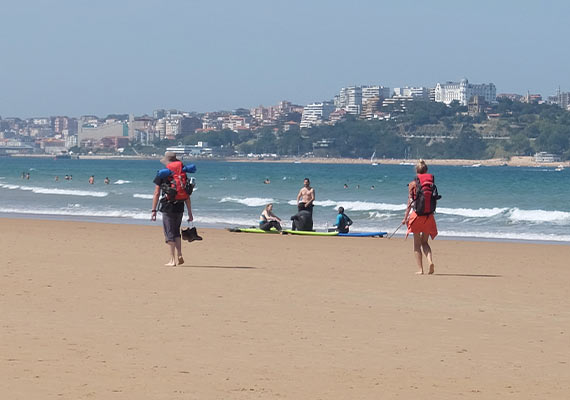
Which Camino de Santiago route is best for walking in the heat?
July and August are the months when many pilgrims, taking advantage of the summer holidays, follow the yellow arrows towards Compostela. They’re also the hottest months. And although all routes of the Camino de Santiago (Saint James Way) can be walked in summer, not all of them suffer the high temperatures in the same way.
If summer is the only time you have available, choosing the right route can make all the difference in enjoying the Saint James Way as it deserves.
That’s why today we’re telling you which Caminos are more bearable in high temperatures, which ones you should avoid, and a few tricks for coping with any of them.
Why the heat feels so different depending on the route
The different routes of the Saint James Way are very long and cross such wide geographic areas that climate variations are only natural. Walking along the Cantabrian Sea is not the same as crossing the Castilian plateau without any shade. Three factors make the difference: proximity to the coast, which softens temperatures thanks to the Atlantic breeze; altitude and terrain, since mountain and forest areas offer shade for much of the day; and the length of the route, because fewer stages mean fewer days of accumulated heat exposure.
The coolest routes: the power of the Atlantic breeze
One very effective way to beat the heat on the Camino de Santiago is to walk beside the sea. Galicia’s coastal routes are, year after year, the most recommended for summer.
- Portuguese Coastal Way: runs right along the coastline, with the Atlantic breeze cooling the walk and several beaches for a dip at the end of the stage. It’s probably the most rewarding option in summer.
- Northern Way (Camino del Norte): follows the entire Cantabrian coast before heading into Galicia, keeping milder temperatures than inland routes for much of its length, with cliffs, riverside woodland and coastal villages.
- Spiritual Variant and Father Sarmiento Route: both move through the Rías Baixas, with stretches along the sea and the chance to stop at beaches such as Combarro, O Terrón or A Lanzada — ideal for cooling off mid-stage.
The English Way: the short option to escape the heat
If your goal is minimising days of heat exposure, the English Way (Camino Inglés) is one of your best bets: with just 5–6 stages from Ferrol or A Coruña, it lets you complete the pilgrimage in just over a week, greatly reducing the accumulated strain of the hottest days. Much of the route also runs through eucalyptus and oak woodland that offers shade.
Routes to avoid in midsummer: the Meseta and the Vía de la Plata
At the opposite extreme are the inland routes that cross vast plains with almost no shade. The stretch of the French Way (Camino Francés) that crosses the Meseta of Castilla y León, between Burgos and León, is among the toughest in summer: mile after mile of open fields where the sun beats down directly for much of the day.
It’s even harder if you walk the Vía de la Plata from its starting point in the south of the peninsula. This is the Jacobean route where extreme temperatures are most easily reached in July and August. If you have no choice but to walk it in those months, one alternative is to join the Vía de la Plata from Ourense, avoiding the toughest southern stretch.
Tips for coping with the heat on any Camino
Whichever route you choose, remember it’s summer, and heatwaves are becoming more common even in the north. So it’s always worth following a few tips:
- Start walking at dawn: getting ahead of the heat and reaching your destination by mid-morning is, by far, the most effective trick on any route.
- Lighten your backpack: with Rutas Meigas, luggage transfer for one bag is already included, and you can add more if you need to. But walk with a small daypack carrying only what’s essential for that stage.
- Choose stages with a river or beach: many stretches of the Camino, even inland ones, pass by swimming spots — check ahead of each stage and make the most of the stop.
- Stay hydrated constantly: don’t wait until you’re thirsty, and always carry sun protection and something to cover your head.
Frequently asked questions about walking the Camino de Santiago in the heat
Which is the best Camino de Santiago to walk in summer heat?
The Portuguese Coastal Way and the Northern Way are the most recommended in summer, since they run along the sea and benefit from the Atlantic breeze, which softens temperatures compared with inland routes.
Which Camino de Santiago should you avoid in midsummer because of the heat?
The Vía de la Plata between Seville and Galicia, and the stretch of the Camino Francés that crosses the Meseta of Castilla y León between Burgos and León, are the toughest in summer due to their long, shadeless plains and the extreme temperatures they can reach.
Is it better to walk the Camino de Santiago along the coast or inland in summer?
In summer, the coast is preferable. The Atlantic breeze softens temperatures and lets you cool off at beaches near the route, which isn’t always possible on inland Caminos.
What time is best to walk in summer to avoid the heat?
It’s best to start the stage at dawn and reach your destination by mid-morning, before temperatures peak between 1pm and 5pm.
Which Portuguese Way is better in summer, the Coastal or the Central route?
The Portuguese Coastal Way is more recommended in summer than the Central route, since it runs right along the coastline with sea breeze and beaches to swim at, while the Central route runs inland with fewer ways to cool off.
Is it advisable to walk the Northern Way in summer?
Yes. The Northern Way follows the Cantabrian coast and keeps milder temperatures than inland routes, with stretches of cliffs, forest and coastal villages to cool off in.
What short Camino can you walk in summer without suffering too much heat?
The English Way, with only 5–6 stages from Ferrol or A Coruña, is one of the best options for reducing days of heat exposure, and much of the route runs through shaded woodland.
The best Way to beat the heat
In the end, the best Camino in the heat is the one you prepare for best. Check whether there’s shade along the route, places to cool off or swim, and follow the tips above — which are really just a bit of “sentidiño” (Galician good sense) applied to the trail.
At Rutas Meigas we can help you plan your Camino de Santiago with the heat in mind, so summer becomes an ally rather than an obstacle on your pilgrimage.
Buen Camino!
Your Camino de Santiago with a travel agency, why?
Why should I book my Camino de Santiago with a travel agency?
Because you’ll have confirmed accommodations, luggage transfers, and support in case of unexpected issues. That means less stress and more time to enjoy your Camino.
What’s included in an organized Camino with Rutas Meigas?
We include carefully selected accommodations, luggage transfers, stage maps, documentation, and 24/7 assistance for emergencies. You can also add half board, guided tours, or anything else you need. Just ask, and we’ll organize it.
Can I customize my Camino?
Absolutely. We adjust stages, accommodations, and services based on your pace, fitness level, and personal preferences.
Do you offer options for groups or companies?
Yes! We organize Caminos for individual travelers, companies, associations, incentive groups, or just a bunch of friends who want to walk together.
Can I do the Camino de Santiago on my own?
Of course! Many pilgrims do it solo and more are doing so every day. And even if you’re walking alone, our team is always available remotely if you need help or assistance.
When is the best time to walk the Camino?
Spring and autumn are ideal for their mild weather and lower crowds. But you can walk the Camino year-round. It really depends on your preferences as a pilgrim.
Do I need to be very athletic to walk the Camino de Santiago?
Not at all. You just need the will to do it. We’ll help you prepare and choose routes that match your physical condition.
How do you plan the stages and daily walking distances?
We tailor each itinerary based on your profile, preferences, and fitness level. You can choose from one of our ready-made tours or ask us for a fully customized route. Our goal: a perfect balance between enjoyment and personal challenge.
What type of accommodation is included in the organized Camino?
We work with a trusted network of hotels, rural guesthouses, and local inns. We always prioritize comfort, quality, and warm hospitality.