The Camino de Santiago is a complete and immersive experience that combines nature, culture, spirituality, and, of course, gastronomy.
It’s well known that despite walking many kilometers daily, stage after stage, few pilgrims end up losing weight. That’s because enjoying Galicia’s exquisite food is an essential part of the experience.
Among the many flavors that pilgrims discover along their journey, one dessert stands out for its history and tradition: Tarta de Santiago.
This delicious almond cake is an emblem of Galician gastronomy, a must-try for anyone who wants to savor the essence of the Camino and, of course, the city of Santiago de Compostela.
The origin and history of Tarta de Santiago
The origins of Tarta de Santiago date back to medieval times when almonds were a luxury ingredient reserved for the wealthy. Over the centuries, this cake has evolved into a symbol of Galicia’s culinary heritage and has even been reimagined in avant-garde cuisine.The early Days: almonds and tradition in Galicia
Although almond trees are not abundant in Galicia, almonds have traditionally been a widely used ingredient, as highlighted by writer Álvaro Cunqueiro in A cociña galega. Almond-based pastries have been documented since the Late Middle Ages, when almonds were imported from eastern Spain. For centuries, almonds were an exclusive product for nobility and clergy, used both for culinary and medicinal purposes. In Galicia, almond-based sweets like Tarta de Santiago were not just culinary delights but also symbols of social prestige, as exotic ingredients were associated with wealth and status.The first written mentions of Tarta de Santiago
The first reliable written record of a recipe similar to today’s Tarta de Santiago appears in the 1838 Confectionery Notebook compiled by Luis Bartolomé de Leybar. Initially prepared as small sponge cakes, its preparation followed the traditional Compostela recipe. By the 20th century, Tarta de Santiago had progressively integrated into Spanish culinary treatises, solidifying its status as an iconic Galician pastry.The birth of a symbol: the cross of Santiago
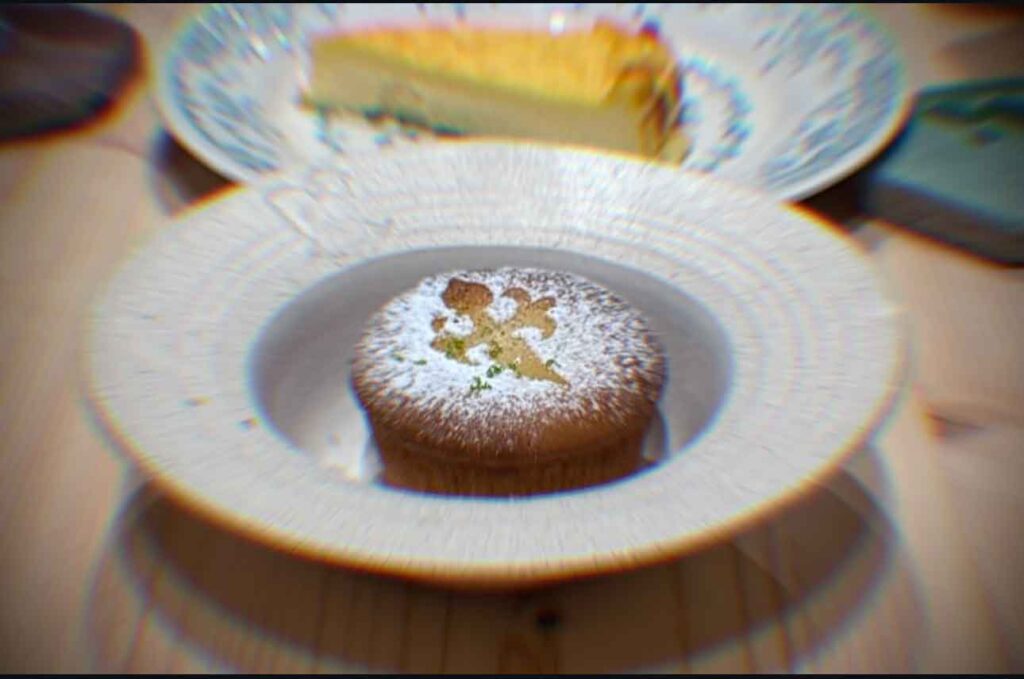
One of the most distinctive elements of Tarta de Santiago is its decoration with the Cross of the Order of Santiago, dusted in powdered sugar. This emblematic design was introduced in 1924 by José Mora, founder of Casa Mora in Santiago de Compostela, who sought to give a unique identity to the traditional dessert. His idea was quickly adopted by other local pastry chefs, and with the rise of tourism and the Camino de Santiago, the cake became popular throughout Galicia.Recognition and protection: the IGP seal of Tarta de Santiago
Tarta de Santiago holds the Protected Geographical Indication (PGI) seal, a quality certification ensuring that it is made according to the traditional recipe with premium ingredients sourced from Galicia. Today, this dessert remains a symbol of Galician gastronomy, appreciated by both locals and visitors, and an essential treat for anyone walking the Camino de Santiago.Traditional Tarta de Santiago recipe
The original Tarta de Santiago recipe is simple yet exquisite, requiring just a few ingredients to achieve its authentic flavor and unmistakable texture.Ingredients:
- 250g ground almonds
- 250g sugar
- 5 eggs
- Zest of one lemon
- ½ teaspoon cinnamon (optional)
- Powdered sugar for decoration
How to prepare Tarta de Santiago:
- Preheat the oven to 180°C (350°F).
- In a bowl, mix the ground almonds, sugar, lemon zest, and cinnamon.
- Add the eggs one by one, beating well to obtain a homogeneous mixture.
- Pour the batter into a greased baking pan and bake for 30-35 minutes, until golden and firm (a toothpick inserted should come out clean).
- Let it cool and decorate with powdered sugar, using a St. James Cross stencil to achieve its iconic design.