The
Camino de Santiago attracts an increasing number of pilgrims each year. According to the
Pilgrim’s Office, over 446,000 people received their Compostela certificate in 2023. Many more pilgrims travel the Camino without seeking this recognition, further emphasizing its global appeal.
Over the centuries, the Camino has evolved significantly, transforming how pilgrims experience the journey and how local communities manage the impact of these visitors. Today, sustainability is a key concern, ensuring the Camino’s millennial essence is preserved without compromising its cultural, historical, or natural integrity.
Let’s not forget that the
Camino de Santiago is a UNESCO World Heritage Site. It’s in everyone’s best interest to contribute to preserving this unique legacy.
The Camino de Santiago: a journey through nature and history
Spanning diverse routes, the
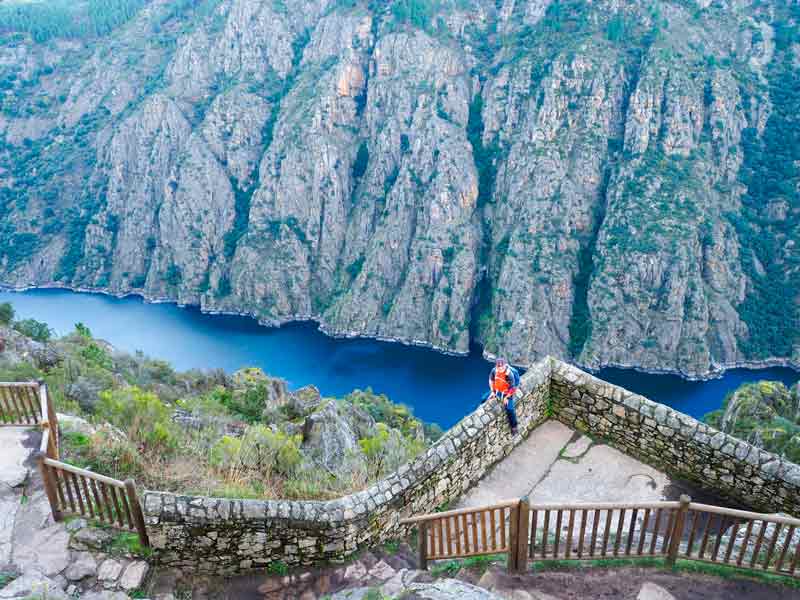
Camino de Santiago crosses breathtaking natural and rural landscapes that demand special attention to sustainability. The growing number of pilgrims has impacted these environments, prompting institutions, organizations, and businesses to promote sustainable practices.
Walking the Camino is not just about reaching Santiago—it’s an opportunity to embrace a responsible way of travel that minimizes environmental impact and supports the well-being of local communities. Many pilgrims view the Camino as a chance to connect with nature while adopting an eco-conscious attitude.
Best practices for a sustainable Camino de Santiago
To ensure the
Camino de Santiago remains a meaningful and sustainable experience for future generations, pilgrims must adopt practices that reduce their environmental and social footprint.
Minimize and manage waste on the Camino
Carrying a small biodegradable bag in your backpack for any waste you generate is essential, especially in areas without trash bins. Always use recycling bins whenever available to help reduce your environmental impact.
Respect the natural environment
The Camino passes through protected rural and natural areas, making it crucial to follow local guidelines to avoid harming flora and fauna. Stay on marked paths and avoid collecting plants or disturbing wildlife.
Embrace the sound of silence
On many parts of the Camino, peace and quiet are integral to the experience. Avoid unnecessary noise, as it can disturb local wildlife, inconvenience residents, and interrupt the reflection of fellow pilgrims.
Support local economies
The Camino is dotted with small shops, family-run bars, and restaurants offering high-quality local products. By purchasing local goods—whether crafts or food—you support the region’s economy and enrich your journey by connecting with Galician culture and traditions.
Respect cultural and architectural heritage
The Camino towns that have witnessed centuries of history. Respect monuments, churches, and historic buildings. Actions like stacking stones—while seemingly harmless—can degrade ecosystems and damage irreplaceable cultural artifacts.
Responsible use of trekking poles
Trekking poles are helpful tools for many pilgrims but must be used correctly. Always use rubber tips to prevent damage to trails and urban areas, especially in Santiago’s historic district, where poles can wear down stone streets. Rubber tips also reduce noise, appreciated by both residents and fellow pilgrims.
Stay safe on roads
In certain stretches, pilgrims may need to walk along roads. For everyone’s safety, walk on the correct side and stay alert to traffic. In narrow areas, groups should move to the same side to allow vehicles to pass without causing delays.
Unplug and reconnect
While mobile phones are useful, particularly in emergencies, the
Camino de Santiago is designed to be a disconnection experience. Follow the traditional waymarks, such as scallop shells and yellow arrows, instead of relying too much on apps like Google Maps, which can detract from the journey’s authenticity.
Hospitality and respect: core values of the Camino de Santiago
One of the defining values of the
Camino de Santiago is hospitality. For centuries, the residents of towns and villages along the Camino have welcomed pilgrims with open arms. This hospitality, however, must be met with respect and consideration.
Pilgrims must be mindful that they are passing through communities with their own daily rhythms. Respect for the peace and quiet of locals, particularly in the early mornings and late evenings, is essential.
Even in Santiago de Compostela, where most routes culminate, this respect remains crucial. The city’s historic center is home to many residents. Pilgrims should remember to behave responsibly and treat the urban environment with care.
The Camino de Santiago: A global community of respect and connection
As the German writer Goethe once said,
“Europe was built on pilgrimages to Compostela”. The
Camino de Santiago is more than a pilgrimage route; it’s a symbol of human and spiritual connection.
Each year, people from all over the world come together on this journey, sharing stories, experiences, and moments of reflection. But this global community of pilgrims also bears the responsibility of preserving the Camino so future generations can enjoy the same transformative experience.
Sustainability on the Camino de Santiago is not just about protecting the environment—it’s also about respecting the culture, traditions, and people that make the Camino so special.
By adopting responsible practices, we not only safeguard the Camino’s legacy but also ensure it remains a place of encounter, reflection, and personal transformation for millions of pilgrims worldwide.
Every step we take reminds us that while we have the right to enjoy the Camino, we also have the duty to care for it. Together, we can keep this historic, cultural, and natural treasure thriving for generations to come.