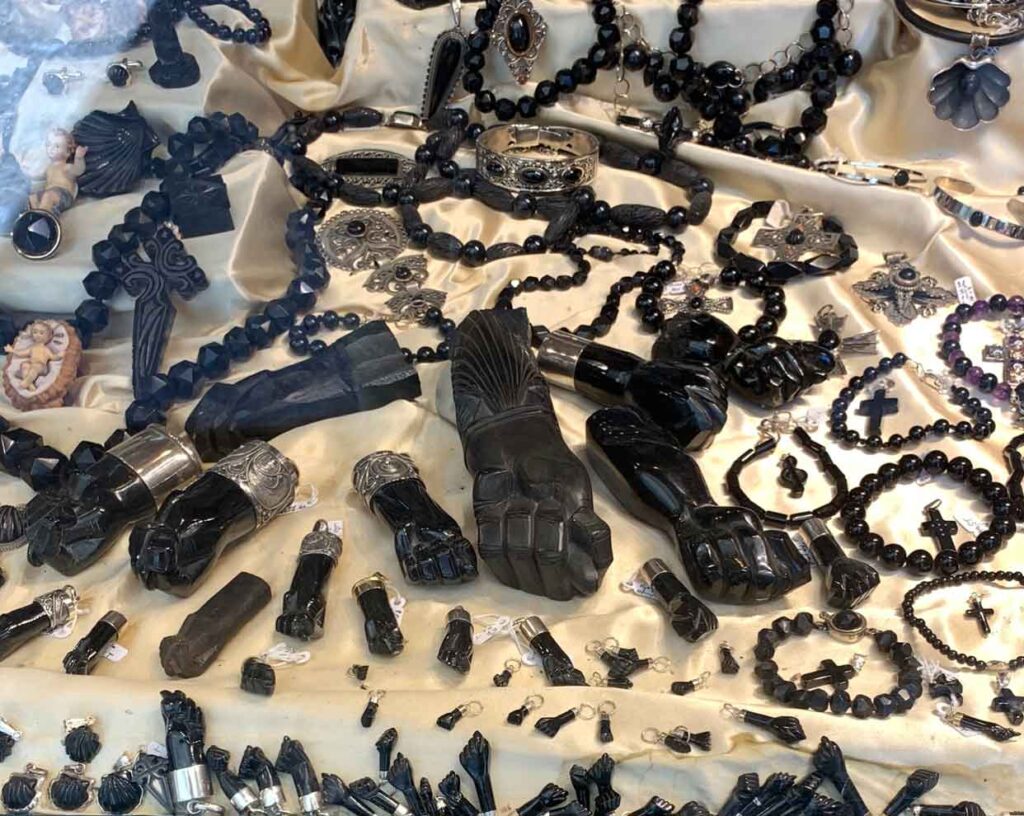
As you stroll through the streets of
Santiago de Compostela, it’s hard not to be captivated by the
jet stone jewelry displayed in the windows of local artisans. Its glossy, deep black shine seems almost magical, calling to pilgrims and visitors alike.
Jet stone (
azabache, for the locals) has a fascinating and mysterious history tied to the
Camino de Santiago. Revered for its protective qualities and used in jewelry and sculpture for centuries, jet stone is one of the most iconic crafts of Santiago. Its strong association with the pilgrimage has made it a cherished symbol of the journey, often seen in medallions, scallop shells, figas, and crucifixes carried by pilgrims as amulets for protection.
What is Jet Stone? The magic of its origins
Though commonly referred to as a stone,
jet stone is actually fossilized wood, which gives it its unique properties—it’s both delicate and durable, compact, and intensely glossy.
This intriguing combination of strength and fragility has fascinated artisans for generations, especially in Santiago, where jet stone has deep historical roots.
The use of jet stone as a talisman stretches back to ancient times. For centuries, it was believed to have magical protective powers, particularly against the evil eye. This belief flourished in the Middle Ages when pilgrims embarking on the Camino de Santiago wore jet stone amulets to shield themselves from the many dangers they encountered on the journey.
For these pilgrims, carrying a jet stone piece was a source of safety—a symbol of faith and a spiritual safeguard against adversity.
The mystical allure of jet stone helped it thrive as a cornerstone of Santiago’s craftsmanship. Its rich black color resonated with the spiritual purpose of the Camino, embodying both faith and protection against unseen forces.
The Jet Stone Guild: Santiago’s golden era of craftsmanship
In 1410, jet stone craftsmanship in Santiago reached its peak with the establishment of the
Guild of Jet Stone Artisans. This guild organized and regulated the production and trade of jet stone, ensuring the material’s quality and upholding strict artisanal standards.
Only guild members were allowed to sell jet stone pieces, and severe penalties were imposed for using inferior materials.
By the 16th century, the guild consisted of about 40 master artisans in Santiago, each with apprentices. Their creations ranged from medallions and crucifixes to intricate sculptures of St. James and scallop shells, which were especially popular among pilgrims.
However, the industry began to decline in the mid-16th century. Fashion trends shifted toward materials like amber and ivory, and religious conflicts in Europe significantly reduced the number of pilgrims traveling to Santiago, which led to a drop in demand for jet stone items.
The revival of Jet Stone in Santiago
By the early 20th century, jet stone craftsmanship in Santiago was nearly extinct. With no remaining master artisans to pass on the tradition, the art was on the verge of disappearing entirely.
In 1926, the
Society of Friends of the Country stepped in to revive this ancient craft. They invited Cristóbal de Ordines, a master jet stone artisan from Asturias, to teach the techniques to Santiago’s craftsmen, breathing new life into the tradition.
Although the industry never regained its former prominence, the effort ensured the survival of jet stone craftsmanship in Santiago. Today, a small group of dedicated artisans continues to work with jet stone, creating everything from protective figas to scallop shells and St. James figurines, all proudly displayed in the city’s shop windows.
Jet Stone: a modern connection to the Camino’s past
Thanks to the efforts of these artisans, the tradition of
jet stone craftsmanship remains alive in Santiago de Compostela. While the scarcity of jet stone from Asturias—the primary source—has led to the use of alternative materials from other countries, careful management of existing reserves ensures the craft endures.
For many pilgrims, purchasing a jet stone piece is more than buying a souvenir—it’s a meaningful token of their journey. From protective figas to scallop shells and St. James sculptures, jet stone items remain some of the most popular keepsakes for those arriving in Compostela.
The
Museum of Pilgrimages in Santiago and the
Provincial Museum of Pontevedra showcase significant collections of historic jet stone artifacts, offering visitors a glimpse into this centuries-old tradition. The Pontevedra Museum houses the world’s largest collection of jet stone pieces, with nearly 300 artifacts dating from the 16th to the 20th century.
Jet Stone: the Artistic and spiritual legacy of Compostela
With its deep historical and spiritual significance,
jet stone remains an integral part of Santiago de Compostela’s culture and the
Camino de Santiago experience.
For centuries, jet stone has symbolized protection, connecting the earthly and the divine while reflecting echoes of ancient Celtic traditions. It is also a testament to the skill and creativity of Compostela’s artisans.
Today, carrying a piece of jet stone is more than a nod to history—it’s a symbol of a pilgrim’s spiritual journey, a connection to a rich tradition, and a promise of protection for future travels.
Because, as the Galicians say,
“Witches don’t exist, but if they do, better to be protected!”