More and more people consider it essential to walk at least one of the many routes of the Camino de Santiago at least once in their lives. It’s no coincidence that in October 2025 we reached, for the first time in our history, our five hundred thousandth pilgrim in a single year. Half a million pilgrims in ten months is no small thing.
But there is another, lesser-known place that—according to legend—you will end up visiting after death if you never made it there while alive. Pilgrimage to San Andrés de Teixido is, therefore, almost an obligation, which is why it’s considered the second most important pilgrimage site for Galicians. And, of course, this tradition is also tied to the history of the Camino de Santiago.
San Andrés de Teixido, where all souls must go
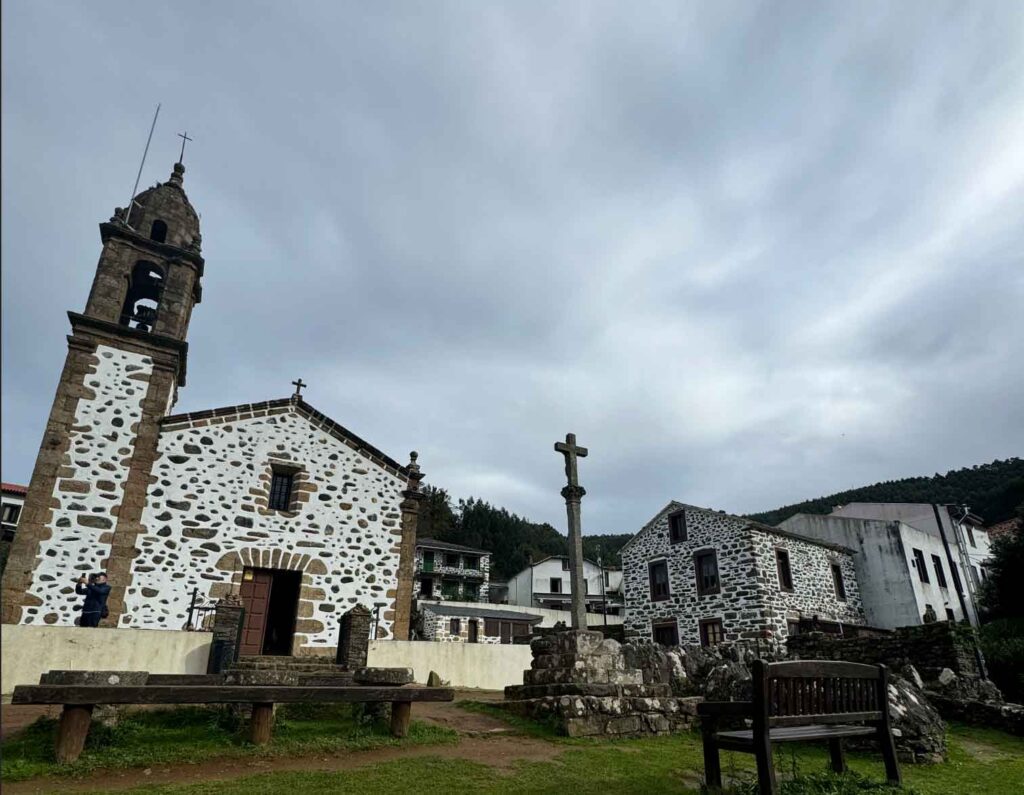
Between Cape Ortegal and the cliffs that rise over the Atlantic lies San Andrés de Teixido—also known as Santo André de Teixido or Santo André de Lonxe—one of those places where Galicia reveals its most mystical side. At first glance, it looks like a tiny village suspended between mist and sea. But those who visit know that this remote corner is much more than a scenic viewpoint. We Galicians say: “A San Andrés de Teixido vai de morto quen non foi de vivo” (“To San Andrés goes in death whoever didn’t go in life”). And with that phrase begins one of Galicia’s oldest and most fascinating traditions, so full of spirituality and symbolism that many see it as a natural extension of the Camino de Santiago.A Sanctuary between sky and sea
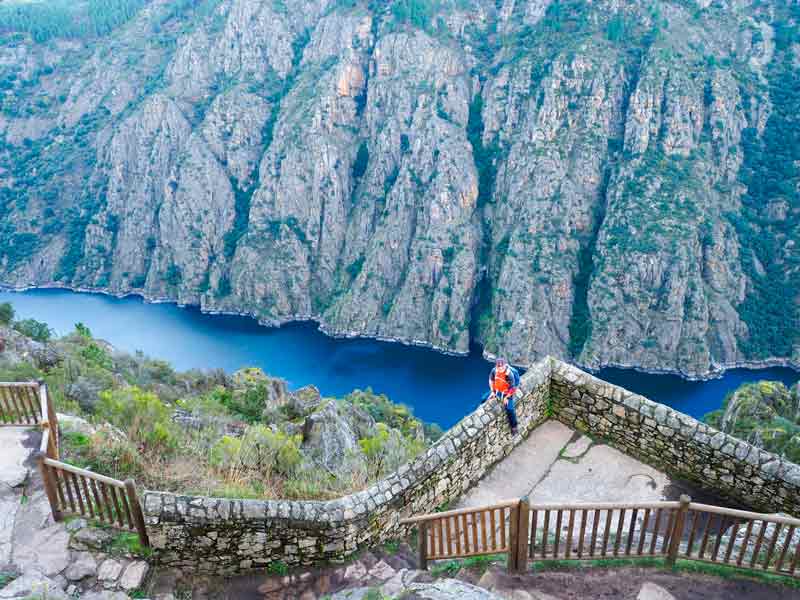
San Andrés de Teixido is part of the municipality of Cedeira in the province of A Coruña, perched on one of the most spectacular stretches of the Galician coastline, 140 meters above sea level. In front of it rise the cliffs of the Serra da Capelada—the highest in continental Europe—where wild horses graze among gorse and heather, and the ocean roars with ancient force. The current sanctuary, built between the 16th and 18th centuries, is a blend of maritime Gothic and Baroque elements, though its origins date back to the 12th century. The temple is dedicated to Saint Andrew, one of the apostles—also a fisherman, like Saint James the Greater—and brother of Peter.The Legend of the forgotten Apostle
As with many Galician sanctuaries, the story of San Andrés de Teixido cannot be understood without its legends. The most famous tells that Saint Andrew himself, jealous to see pilgrims flocking to Santiago de Compostela instead of to his lonely temple hidden in the mountains, complained to God about being forgotten. The Lord, moved by compassion, promised him that no soul would fail to visit him: “To San Andrés de Teixido will go in death whoever did not go in life.” Since then, it’s said that souls who didn’t make the pilgrimage while alive return reincarnated as insects, lizards, or other small creatures to fulfill their promise. For that reason, those who walk the paths leading to San Andrés do so carefully, avoiding stepping on any small creature that crosses their way—lest they prevent a soul from completing its unfinished pilgrimage.Pilgrimage and ancient Rituals: fertility, love, and other wishes
For centuries, thousands of Galicians have made the pilgrimage to San Andrés, and many traditions must be followed there—beyond avoiding the fate of having to return after death.The Stone
Tradition says you must bring a stone from your place of origin and leave it upon arrival in one of the milladoiros (piles of stones marking the passage of pilgrims). That stone serves as proof that you completed the pilgrimage while alive—and spares you from having to return later as a tiny creature.The Ex-votos
Another deeply rooted custom involves leaving ex-votos—offerings given in thanks for favors received or promises fulfilled. Inside the sanctuary and its small annexes, you can see wax figures shaped like body parts—usually linked to healing—as well as candles in the shape of farm animals placed there for protection.The Sanandresiños
Visitors also traditionally take home the famous sanandresiños, the unique good-luck charms of San Andrés de Teixido, handcrafted by local villagers. These small figures—made by hand from unfermented bread dough, baked, and dyed with natural pigments—are considered powerful talismans. Each sanandresiño has its own meaning:- The flower, inspired by the herba de namorar, attracts true love
- The ladder symbolizes effort and achievement, bringing success at work
- The boat protects travelers and those beginning new journeys
- The hand supports study and learning
- The saint (Saint Andrew himself) watches over health and harmony
- The crown offers protection from adversity
- The fish ensures food and prosperity
- The dove brings peace, purity, and spiritual balance