Beyond the kilometers, the backpacks, or the variety of accommodations, the Camino de Santiago is an unforgettable experience of personal transformation. It’s a pause in the midst of the noise, a space to reconnect with yourself and with what truly matters. It’s also a simple and profoundly human adventure.
A route rich in history, culture, and meaning
The Camino de Santiago has over a thousand years of history. It began as a pilgrimage route to the tomb of the Apostle James, in the Cathedral of Santiago de Compostela, and has since been walked by kings, nobles, farmers, artists, and pilgrims of all kinds.Walking the Camino also means walking in their footsteps. Every stone along the path, every Romanesque church, every roadside cross connects you to a shared history that is still being written today.
It’s also a different way to discover the north of Spain—not as a tourist, but as a pilgrim. You’ll pass through small villages, meet locals, try regional food, and see how the landscape changes from stage to stage.
Walking the Camino: a journey taken with your feet, but felt with your heart
What makes the Camino special isn’t just the destination, but everything you experience along the Ruta Jacobea. The slow pace of walking lets you see the world with fresh eyes. You rediscover the value of simple things: a good coffee at sunrise before starting the day’s stage, a conversation with another pilgrim, a yellow arrow showing you the way, a milestone telling you there’s one kilometer less to go.Your daily routine changes: you wake up, have breakfast, walk, pause to admire the view, listen to your body, take breaks, think. And slowly, that rhythm becomes something deeper. The Camino teaches you to be present. To stop rushing and start walking.
The Camino de Santiago: an experience for everyone
You don’t need to be an athlete or an experienced pilgrim to walk the Camino. There are routes for all levels—from more demanding ones like the Camino Primitivo or the Camino del Norte, to more accessible options like the Portuguese Way or the English Way.You can do it solo, with a partner, with friends, or even as a family. You can walk for several weeks or simply complete the final 100 kilometers to earn your Compostela. What matters isn’t the distance, but the experience you live during your pilgrimage.
And today, you can count on specialized agencies like Rutas Meigas, who organize all the logistics so you can focus entirely on enjoying the journey. Luggage transport, handpicked accommodations, travel insurance, assistance—you choose how you want to live your experience.
A space to disconnect—truly
One of the things pilgrims value most is that the Camino offers something that’s increasingly rare in daily life: real disconnection. There are no tight schedules, no constant notifications (in fact, some areas don’t even have cell coverage). And that’s something to appreciate.Walking for hours with nothing but the landscape, the sound of your footsteps, and the wind or light rain on your face allows you to think clearly, sort through your thoughts, gain perspective, or simply stop thinking altogether.
Many pilgrims say that after a few days on the road, they feel a sense of calm they hadn’t experienced in a long time. It’s like hitting reset. A mental and emotional cleanse you didn’t know you needed—until you feel it.
Real friendships, even if you walk the Way alone
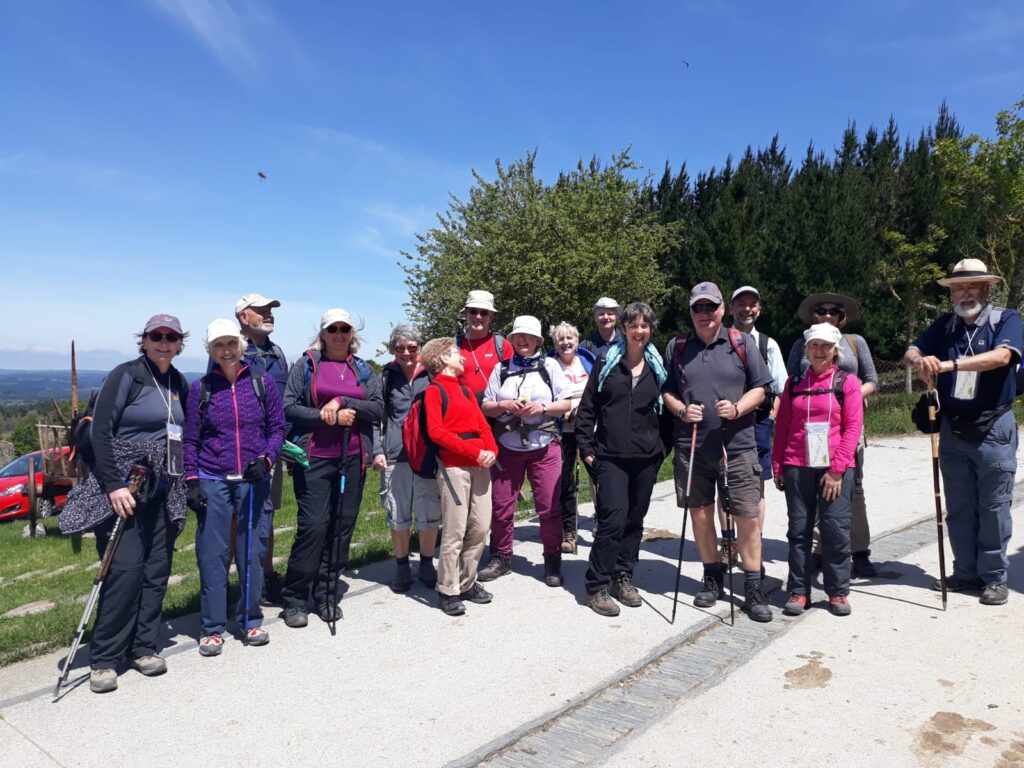
One of the greatest surprises of the Camino de Santiago is the people you meet. Even if you start alone, chances are you’ll finish the journey with companions. Along the Camino, friendships form spontaneously—genuine and free from pretenses.Sharing exhaustion, joy, a meal, or a tough stage creates bonds that sometimes last a lifetime. Pilgrims recognize each other. It doesn’t matter the language or age: everyone walks with a purpose, and that unites us.
A challenge that makes you grow
The Camino isn’t always easy. There are hard days, blisters, fatigue, hills that feel endless. But that’s also part of the experience. Overcoming each stage—no matter how tough—gives you a sense of achievement that goes far beyond the physical.Every time you reach your destination, you feel like you’ve gained something: confidence, resilience, self-belief. And when you finally arrive in Santiago de Compostela and see the cathedral before you, it all makes sense. It doesn’t matter if it was 100 kilometers or 800—you made it, and you got there on your own.
The Camino doesn’t end in Compostela
The Way doesn’t end at the steps of the Cathedral in Santiago, or even at Cape Finisterre, the “End of the World.”Because the best thing about the Camino is that, even though the route ends in a specific place, its impact continues long after you return home. The Camino changes you. It makes you see things differently. You learn to appreciate what really matters, to put problems in perspective, to prioritize your well-being.
Many pilgrims say the Camino continues, even if they’re no longer wearing the shell of Santiago. What you lived, what you discovered, what you learned—those things stay with you.
An opportunity to focus on what matters
In a society that always seems to be in a rush, the Camino de Santiago is the antidote to anxiety. Walking the Ruta Jacobea is an opportunity to pause, to listen to yourself, and to reconnect with what truly matters: with yourself, with others, and with your surroundings.It can be a turning point, a moment of reflection, a way to mark a life change, or simply a gift you give yourself.
So, why not walk the Camino de Santiago?
You don’t need a grand reason to walk the Camino. Sometimes, all it takes is a small spark of curiosity or the desire to break free from routine. The rest, you’ll discover step by step.Because the Camino is always waiting. And once you walk it, you’re never quite the same again.
Buen Camino!